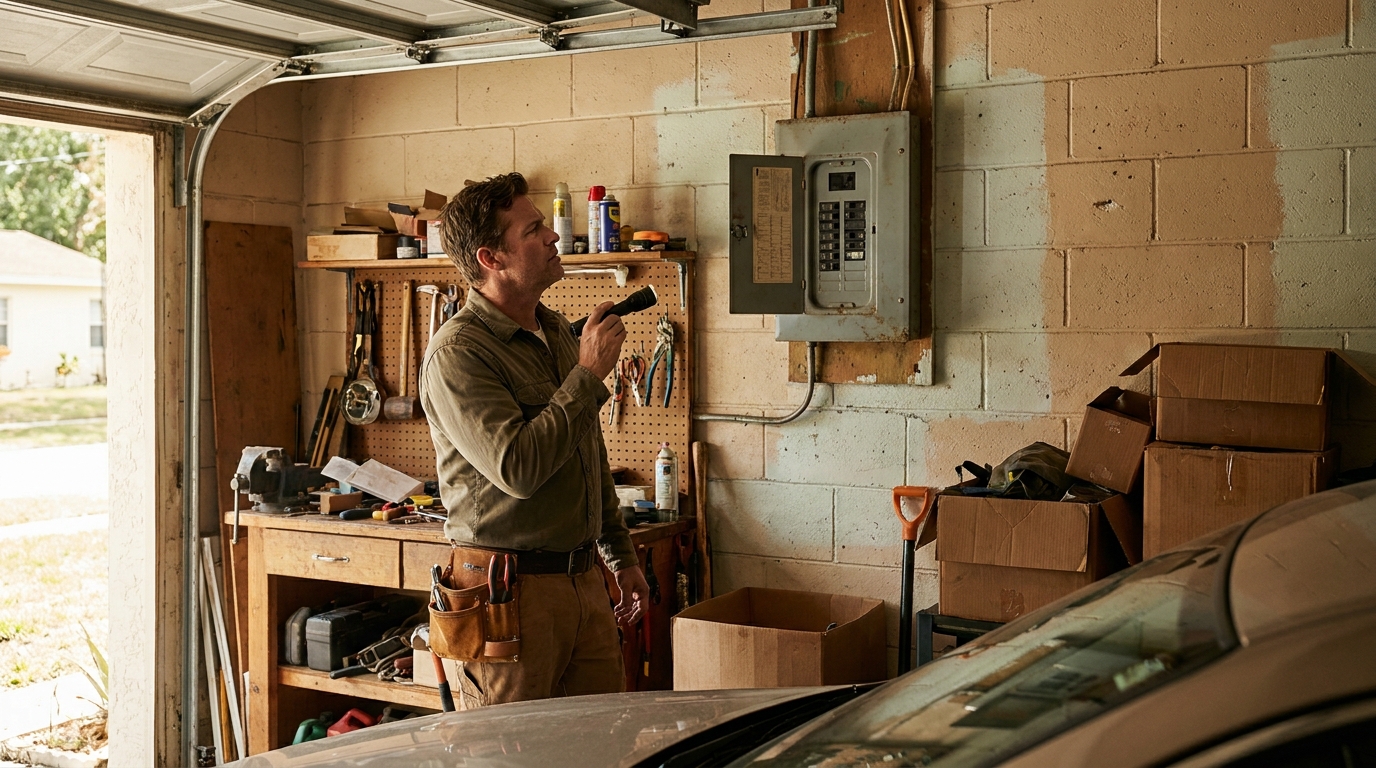
An older panel doesn’t automatically need replacement. The decision depends on its condition, the available circuit space, the home’s calculated electrical load and whether the planned work changes the service equipment. A qualified electrician should evaluate those issues separately instead of recommending an upgrade based only on the home’s age or the number printed on the panel.
Start with the problem you’re trying to solve
A panel project can mean several different things:
- Replacing damaged or unsuitable panel equipment
- Adding breaker space for new circuits
- Correcting a problem on one branch circuit
- Increasing the electrical service capacity
- Relocating equipment as part of other work
Those aren’t interchangeable. A subpanel can create more breaker spaces, but it doesn’t increase the amount of power available from the utility service. Likewise, open breaker spaces don’t prove that the service has enough capacity for another large load.
If you’re considering an EV charger, pool equipment, an electric appliance or another substantial addition, the electrician should evaluate the actual equipment requirements and the home’s existing loads. The panel rating alone doesn’t settle the question.
A standby generator is different. It supplies selected loads during an outage and doesn’t add utility load by itself. Its design still requires decisions about transfer isolation, fuel, equipment location and which loads need backup.
Breaker trips don’t diagnose the whole service
A breaker that trips when particular devices operate may indicate too much load on that branch circuit, a fault, a problem with connected equipment or another condition that needs inspection. It doesn’t automatically mean the entire service is undersized.
Note which circuit trips, what was operating and whether the problem repeats. Don’t keep resetting a breaker that trips again, and don’t remove the panel cover to investigate. An electrician can trace the affected circuit and determine whether the remedy belongs at the appliance, branch circuit, panel or service level.
Flicker, heat and odors need careful attention
Brief light changes can have more than one cause, so timing alone can’t identify the problem. Unexplained or recurring flicker, buzzing or crackling, hot or discolored plates, a burning odor, shocks or frequent trips call for prompt inspection by a qualified electrician.
Don’t touch damaged, wet or unusually hot electrical equipment. If there’s smoke or fire, leave the hazard area and contact emergency services.
A fuse panel or older label is a reason to inspect, not guess
The presence of fuses doesn’t by itself establish the condition or capacity of the electrical system. An electrician needs to examine the equipment, connections, available replacement components, connected loads and any alterations made over time.
The manufacturer label and model information also matter, but the correct recommendation depends on the equipment actually installed and its condition. Don’t remove a cover to search for labels. Record only information visible from a safe position, or leave identification to the electrician.
This same property-specific approach applies throughout Tampa Bay, including Seminole Heights. A neighborhood or construction era can’t establish what panel, wiring or service capacity is present in an individual home.
Planning a new electrical load
Before adding equipment, gather the model information and installation requirements. The electrician will need to know whether the project uses an existing or new circuit, the proposed equipment location, the wiring route and access conditions, and what other electrical loads are already present.
For example, hot tub wiring must be designed around the selected equipment rather than a universal circuit assumption. An EV installation likewise depends on the vehicle, charger, daily driving needs, parked time and available electrical capacity.
A load calculation helps determine whether the existing service can support the proposed work. If it can, the answer may involve a new circuit, different charging configuration or added breaker space rather than a service-capacity increase. If it can’t, the electrician can explain which parts of the service would need to change.
Panel replacement and service upgrade are different scopes
Replacing a panel doesn’t always mean increasing service capacity. Conversely, increasing capacity may involve more than replacing the interior breaker panel.
Useful questions for the electrician include:
- Is the problem limited to one circuit, the panel equipment or the service capacity?
- Does the load calculation support the proposed addition?
- Are more breaker spaces needed, or is additional service capacity needed?
- Which existing components can remain?
- Will the meter, main disconnect, service conductors, grounding or bonding be affected?
- Does the equipment need to move?
- Which authority has jurisdiction over the property, and what review applies to this scope?
- Will utility coordination be necessary?
These answers define the project more accurately than the home’s age or a quick count of empty breaker spaces.
What affects the project cost
The scope changes depending on whether the job is a panel replacement, a service-capacity change or a repair elsewhere in the system. Cost can also be affected by equipment compatibility, access, relocation, service-conductor work, meter or disconnect changes, grounding and bonding corrections, wall repair, utility coordination and jurisdictional requirements.
Because those conditions must be observed, a generic Tampa price can’t describe every project. Ask for a written scope that identifies what will be replaced, what will remain, which party handles each coordination step and what could change after inspection.
What a useful panel evaluation covers
A qualified evaluation should connect the recommendation to observed conditions. That can include the panel and breaker condition, signs of heat or arcing, circuit identification, available breaker space, equipment compatibility and a load calculation when new electrical demand is being considered.
Tampa Electrical Pro refers customers to independent licensed and insured electricians. The selected contractor determines the diagnosis, proposed scope, scheduling, permits and price. That gives you a recommendation tied to the actual system instead of an assumption based on age alone.