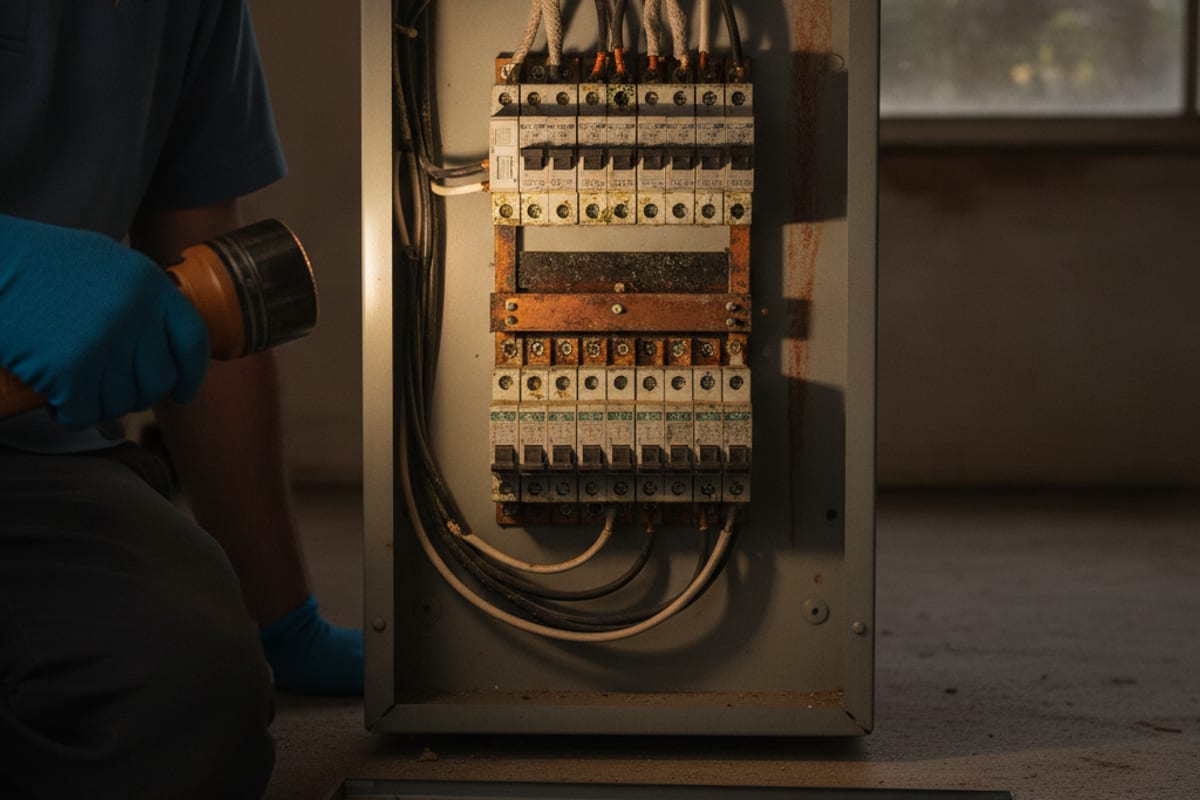
Intermittent buzzing from an electrical panel usually means something is vibrating, cycling under load, or making an unstable electrical connection. Because loose connections and electrical arcing can overheat, have a licensed electrician inspect the panel promptly.
A faint, steady hum can sometimes come from normal electromagnetic vibration. Buzzing that starts and stops deserves more attention, especially if it’s new, growing louder, or accompanied by flickering lights.
Why does the panel buzz only sometimes?
Intermittent sounds often follow changes in electrical demand. An air conditioner, pool pump, water heater, dryer, or other large appliance may trigger the noise as it starts or stops.
A breaker can also vibrate only while a particular circuit carries a heavy load. The sound may disappear before an electrician arrives, so note what was running when you heard it.
Loose connections behave differently. Heat and vibration can make contact shift as equipment operates. That can produce buzzing, sizzling, or crackling that comes and goes unpredictably.
Humidity can contribute to corrosion around electrical equipment. Tampa Bay’s warm, damp conditions make moisture clues worth checking. Rust, water staining, or a musty panel area should be reported during the service call.
What electrical problems can cause the buzzing?
The sound’s location and character help narrow the possibilities. Common causes include:
- A loose wire or terminal can vibrate and create heat under load.
- A worn breaker can buzz while struggling to maintain stable contact.
- Electrical arcing can produce sharp buzzing, sizzling, or crackling sounds.
- A breaker may vibrate because its circuit is carrying a demanding load.
- Nearby equipment can transfer vibration into the panel enclosure.
Repeated breaker trips add another useful clue. Review what a breaker that keeps tripping can indicate if the noise and tripping happen together.
Sometimes the sound isn’t actually inside the panel. A transformer, doorbell component, disconnect, or nearby HVAC control may transmit vibration through the wall. A licensed electrician can listen under controlled conditions and test the associated circuits.
How can I tell if the buzzing is dangerous?
Treat buzzing as urgent when it comes with heat, smoke, a burning odor, visible sparking, or crackling. Lights that flicker or dim at the same moment also suggest an unstable connection.
Other warning signs include darkened insulation, scorch marks, melted plastic, or a breaker that feels unusually hot. Don’t touch damaged equipment to investigate it.
If you notice smoke or active sparking, move away and contact emergency services. If conditions allow safe access, switch off affected appliances without opening the electrical panel. Never remove the panel cover yourself.
Even shutting off the main breaker doesn’t make every part inside a panel safe. Incoming service components can remain energized. Inspection belongs to a qualified professional with proper testing equipment.
What should I do before an electrician arrives?
Leave the panel closed and keep the space around it clear. Don’t tighten screws, press on breakers, or repeatedly reset a breaker that trips.
Write down when the buzzing occurs and how long it lasts. Note any appliance that starts simultaneously, along with flickering, odors, heat, or recent electrical work. A short recording made from a safe distance can help if the sound stops before the visit.
Avoid running the suspected appliance if doing so triggers loud buzzing or other warning signs. If the problem appears related to damaged panel components, the pros we send can explain whether targeted electrical repair service is appropriate.
Will the panel need to be replaced?
Not necessarily. The correct repair depends on the sound’s source, the panel’s condition, and any heat damage found during testing.
A loose termination may require correction after the affected components are evaluated. A failing breaker may need replacement with a compatible component. Corrosion, damaged bus connections, overheating, or broader capacity concerns can make a larger repair more reasonable.
The licensed electricians we send can inspect circuit loads, breaker connections, and visible signs of deterioration. If replacement is warranted, they can discuss a professional panel upgrade based on the home’s present and planned electrical needs.
Don’t judge the panel by sound alone. Testing should determine the repair.
Frequently asked questions
Can a normal electrical panel make a humming sound?
Yes, a quiet and steady hum can result from ordinary electromagnetic vibration. A new, intermittent, loud, or changing buzz should still be inspected because sound alone can’t rule out a loose connection.
Does buzzing mean a breaker is about to trip?
No, buzzing doesn’t always mean a trip is imminent. It can reflect vibration, a heavy load, damaged contacts, or another component nearby. Buzzing combined with repeated trips needs prompt diagnosis.
Can an air conditioner make the panel buzz?
Yes, an air conditioner can coincide with panel noise as its electrical load starts or changes. That timing helps diagnosis, but it doesn’t prove the air conditioner itself is faulty.
Is it safe to open the panel and find the sound?
No, homeowners shouldn’t remove the panel cover to locate buzzing. Dangerous energized components may remain exposed even when the main breaker is off. Observe only from a safe distance.
Can humidity cause electrical panel buzzing?
Yes, humidity can support corrosion that weakens electrical connections over time. Moisture may not directly create every buzz, but rust, staining, or condensation around a Tampa Bay panel warrants professional attention.
Call Tampa Electrical Pro at (813) 850-0320 to get matched with a licensed electrician serving Hillsborough, Pinellas, or Pasco County.