Breaker panel replacement costs in Tampa depend on what is actually being replaced. A same-capacity panel replacement, a service-capacity upgrade, and repairs involving the meter or service entrance are different projects. A useful estimate identifies which one you need and lists the included work instead of combining them under one price.
This site’s published range for a 100-amp to 200-amp panel upgrade is $2,500 to $4,500. That figure is an upgrade, not a same-capacity replacement. This site has no separate published price for replacing a panel at the same service capacity.
Tampa Electrical Pro connects customers with independent licensed and insured electricians. The selected electrician determines the scope, scheduling, permits, workmanship, and price after evaluating the property.
Replacement and service upgrades solve different problems
A panel replacement changes the panelboard and compatible breakers while keeping the existing service capacity when the rest of the installation can remain. It may be considered when the enclosure or internal components are damaged, replacement breakers are not suitable or available, or a qualified electrician finds another condition that cannot be corrected with a narrower repair.
A service upgrade changes the amount of utility power the electrical system is designed to receive. That can involve more than the panel. The electrician may need to evaluate the service conductors, service entrance, meter equipment, grounding and bonding, utility requirements, and the loads the home must support.
An upgrade should not be priced as a complete same-capacity replacement with another full project automatically added on top. Contractors may organize estimates differently, so compare the stated scope and total rather than assuming two published ranges should be stacked together.
Circuit space is not the same as service capacity
A panel can be out of suitable circuit positions without the home necessarily needing more service capacity. A subpanel may provide additional circuit space, but it does not increase the capacity of the electrical service.
The reverse can also occur. A panel may have open positions while the calculated load or another part of the service limits a proposed addition. Empty breaker spaces alone do not prove that a new large circuit can be installed.
This distinction matters when planning an EV charger, new electric equipment, or other substantial loads. The electrician evaluates the actual equipment requirements and the electrical capacity rather than deciding from the panel label or breaker count alone.
A whole-home generator is different. Standby equipment supplies backup power through transfer isolation from the utility. The generator itself does not add utility load simply because it is connected to the home. Its design depends on the loads selected for backup, the transfer equipment, fuel, and the existing electrical system.
What changes the replacement scope
Several property-specific conditions can make one panel project different from another:
- Panel condition: Heat damage, water intrusion, corrosion, damaged connections, or an unsuitable enclosure can expand the work beyond replacing breakers.
- Compatible equipment: The proposed panel and breakers must be suitable for the installation. An estimate should identify the equipment being installed rather than promise that existing damaged parts can be cleaned and reused.
- Service equipment: Work involving the meter enclosure, service entrance, or utility connection is a different scope from changing only the panelboard.
- Circuit condition: Existing conductors, terminations, labeling, grounding, and bonding may require attention if the electrician finds defects during the evaluation.
- Access and finish work: Panel location, working access, concealed routing, and any wall or exterior restoration affect labor and coordination.
- Capacity changes: Increasing service capacity can require a load calculation and additional coordination that a same-capacity replacement may not require.
- Jurisdiction and utility coordination: Permit, inspection, and utility procedures depend on the property’s actual jurisdiction and the work being performed.
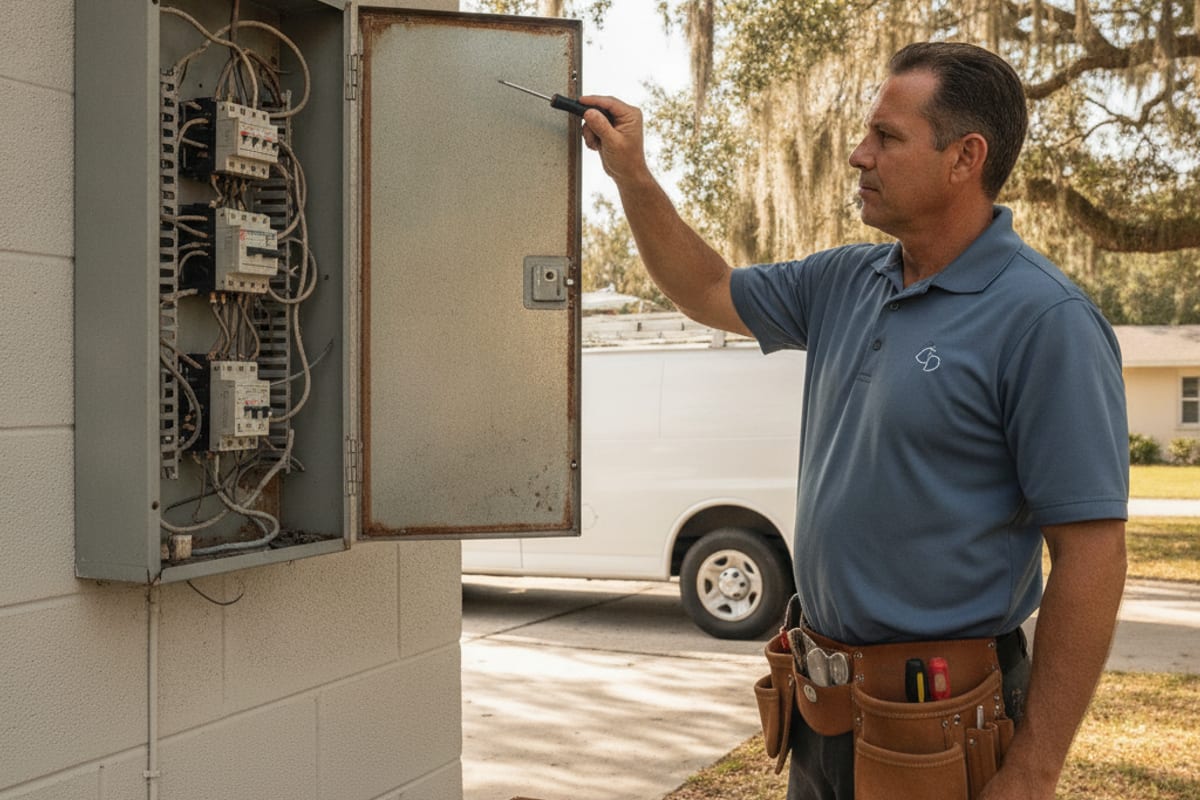
An exterior location or a Tampa Bay address does not establish that a panel contains corrosion. If moisture or rust is visible, do not remove the cover or touch internal components. A qualified electrician should determine the source and whether affected equipment can remain in service.
When the panel needs prompt inspection
A panel’s age or brand by itself does not diagnose its condition. The useful questions are what symptoms are present, where they occur, whether they recur, and what the electrician observes and tests.
Unexplained flickering or dimming, frequent trips, buzzing or crackling, a burning odor, shocks, or hot or discolored plates call for prompt qualified inspection. Do not keep resetting a breaker that trips again or open the panel to investigate. If there is smoke or fire, leave the hazard area and contact emergency services.
Storm exposure also needs a condition-based assessment. Do not approach a wet or visibly damaged panel. Damage may involve the panel, service equipment, conductors, or another part of the electrical system, so the repair cannot be diagnosed from a generic checklist.
Federal Pacific, Zinsco, and insurance notices
If an insurer names Federal Pacific, Zinsco, or another panel in a notice, use the actual notice as the starting point. Insurer requirements, documentation, and deadlines vary. The presence of a particular label does not support a universal statement that every Florida insurer will require the same replacement or follow the same schedule.
You can photograph an accessible exterior label without removing the panel cover. Share the notice and photographs with the electrician so the estimate addresses the identified equipment and any documentation the insurer requested. The electrician still needs to inspect the installation before defining the repair.
Permits, licensing, and utility isolation
The applicable permit authority depends on the property’s jurisdiction and the final scope. A Tampa mailing address alone does not settle which department handles the work. The selected contractor should identify the authority, specify whether permit and inspection charges are included, and explain any utility coordination required.
Do not assume the meter remains energized during the project. Safe isolation and restoration depend on the installation, the work, and the procedures of the utility and local authority. An estimate also should not guarantee same-day restoration unless the responsible parties have confirmed that schedule for the specific job.
Florida has different electrical contractor license categories and scopes. Confirm that the business has an active license appropriate for the work and jurisdiction through MyFloridaLicense.com. The individual performing each task does not necessarily hold the contractor license personally.
How to compare panel estimates
Ask each contractor to separate the work clearly enough that you can compare like with like:
- Is this a same-capacity panel replacement or a service-capacity upgrade?
- Which panel, breakers, and related components are included?
- Does the scope include the meter enclosure or service entrance, or only the panelboard?
- Are repairs to existing circuits or damaged conductors included or listed separately?
- Who coordinates utility disconnection and reconnection if required?
- Which permit authority applies, and are permit and inspection charges included?
- What wall, paint, stucco, or exterior restoration is excluded?
- What conditions could require a written change to the scope?
A lower estimate may cover only the panelboard while another includes service equipment, circuit corrections, permit coordination, or finish work. The itemized scope explains the difference better than an unsupported Tampa-wide average.
Planning for future electrical work
Replacing a panel can be a good time to discuss known future loads, but it does not make a capacity increase automatically necessary. Tell the electrician about equipment you realistically plan to add and provide its labeling or model information when available. The electrician can compare those requirements with the existing service and calculate the relevant load.
If the problem is limited to a compatible breaker or another repairable component, complete replacement may not be the right answer. If damage extends through the enclosure, bus, service equipment, or multiple connections, a narrow repair may not address the condition. That decision belongs to the on-site evaluation, not the panel’s age alone.
Arrange a panel evaluation
Call Tampa Electrical Pro at (813) 850-0320 to be connected with an independent licensed and insured electrician. Have the panel location, exterior label photographs, recurring symptoms, insurance notice if applicable, and planned electrical additions ready to discuss. For more help deciding what deserves inspection, read the guide to panel warning signs.