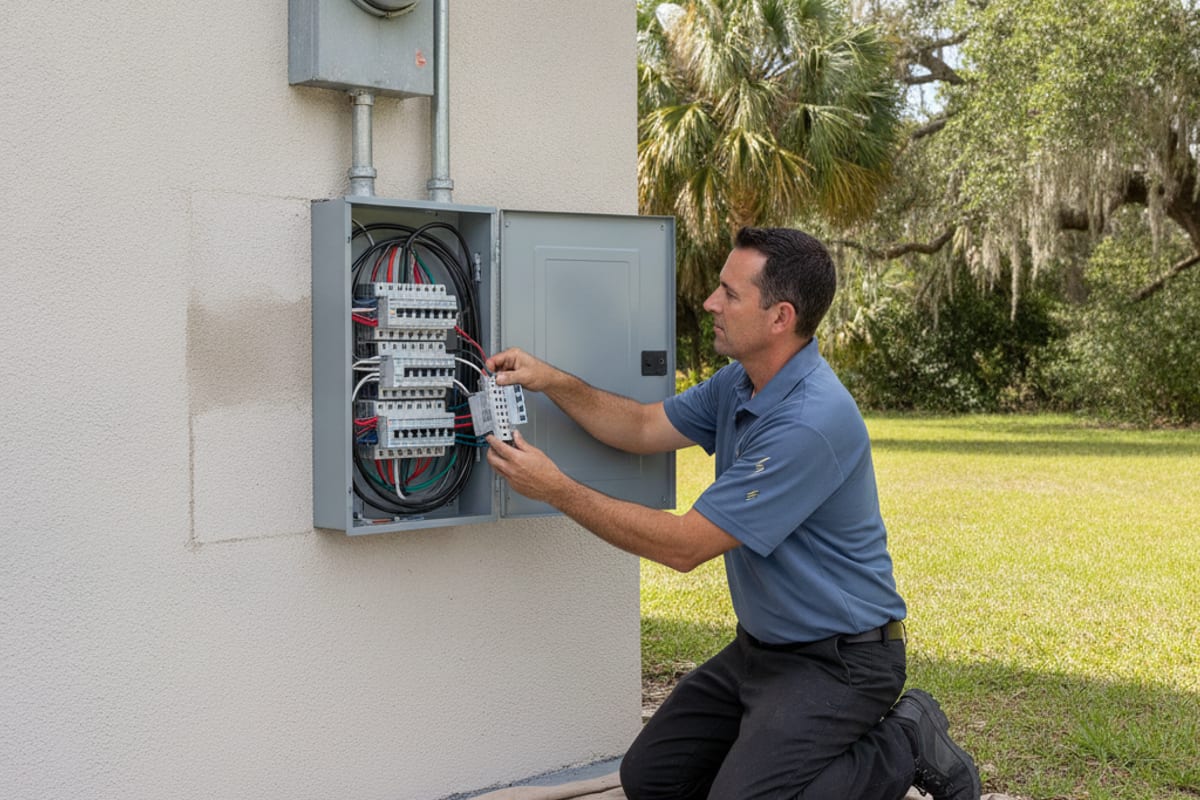
Electrical panel bus bar replacement cost depends on the extent of the damage, access to the affected components, compatible-part availability, permit or utility requirements, and the condition of the rest of the panel. An isolated repair may involve less work than replacing the complete panel, but damage to the enclosure, conductors, breakers, or other internal components can change the appropriate scope.
What this site can say about cost
This site has no published isolated bus-bar replacement price for Tampa. The adjacent published comparison for replacing the panel as a 100-amp to 200-amp upgrade is $2,500 to $4,500. A diagnostic inspection visit is published at $150 to $450. Neither figure is a quote for cleaning corrosion or swapping only a bus assembly. Compatible-part rules still control whether an isolated repair is even available.
What determines the cost of replacing a bus bar?
The bus bar is the conductive metal assembly that distributes power to the breakers. Each breaker connects to the bus through a metal contact point commonly called a stab.
A bus bar repair begins with identifying the panel and examining the affected connection and surrounding components. Depending on the panel design and location of the damage, the electrician may need to remove breakers, label or document conductors, disconnect wiring that blocks access, and inspect the enclosure. Not every repair requires most branch-circuit conductors to be disconnected.
Several conditions shape the work:
- Whether a compatible replacement assembly is available for the exact panel
- Whether heat, corrosion, or arcing affected breakers, conductors, insulation, or the enclosure
- Whether the damaged components can be accessed without disturbing additional wiring
- Whether water intrusion or another underlying condition must also be corrected
- Whether the property’s jurisdiction requires a permit for the proposed scope
- Whether utility coordination is needed to de-energize service equipment safely
The electrician also needs to investigate why the connection failed. Possible causes include a loose or damaged breaker connection, moisture intrusion, excessive heat, or a poor connection at the affected point. Replacing a component without addressing an observed cause can leave the panel vulnerable to further damage.
Can an electrician replace only the bus bar?
A limited bus bar repair may be possible when the damage is isolated, the enclosure and surrounding components remain serviceable, and a compatible assembly is available for that exact panel.
Bus assemblies aren’t interchangeable merely because they look alike. Mounting points, electrical ratings, breaker connections, and the panel manufacturer’s design all matter. Parts from an unrelated panel shouldn’t be adapted or improvised to fit.
Access can still make a limited repair labor-intensive. Breakers and any conductors that must be moved need to be handled carefully, and affected connections should be evaluated before the panel returns to service. The practical comparison is therefore not simply the price of one internal part versus a complete panel. It is the full scope needed to restore the damaged assembly safely.
When does a full panel replacement make more sense?
A full panel replacement may be the better scope when damage extends beyond one bus connection. Heat can affect breaker contacts, conductor insulation, and adjacent components. Moisture can leave corrosion in more than one area of the enclosure. Replacement may also be appropriate when a compatible internal assembly is unavailable or the cabinet itself is damaged.
A like-for-like panel replacement is different from an electrical panel upgrade. Replacing damaged equipment doesn’t automatically increase the home’s electrical service capacity. Likewise, a panel with no open breaker positions may need a circuit-space solution, but that condition alone doesn’t prove that the utility service must be upgraded. A subpanel can add circuit spaces, but it doesn’t add service capacity.
Planned electrical equipment should be evaluated by its actual load and installation requirements. Vehicle charging, cooling equipment, and kitchen appliances may affect a load calculation. A standby generator supplies backup power through transfer equipment; the generator itself doesn’t add utility load merely because it is installed.
A licensed electrician in the referral network can inspect the panel and explain whether the proposed work is an isolated repair, a complete replacement, or a separate capacity project. Tampa Electrical Pro refers customers to independent licensed and insured electricians. The selected contractor determines the diagnosis, scope, permits, scheduling, and price.
What signs call for a panel inspection?
Bus bar damage may appear where a breaker connects to a bus stab. Pitting, darkening, melted material, or a breaker that no longer seats correctly can indicate damage at that connection, but identifying the cause requires a qualified inspection.
Recurring trips, unexplained flickering or dimming, crackling or buzzing, hot or discolored plates, burning odors, and shocks also call for prompt electrical repair diagnostics. These symptoms don’t identify the bus bar as the cause, and a generic description can’t determine whether the problem is in the panel, a branch circuit, connected equipment, or the utility supply.
Don’t remove the panel cover or reach into electrical equipment to investigate. Energized parts may remain present even when branch breakers are off. Don’t approach a wet, visibly damaged, or arcing panel or repeatedly reset a breaker that continues to trip. If there is smoke or fire, leave the hazard area and contact emergency services.
If the cabinet shows rust, staining, or evidence of prior water intrusion, the electrical damage and the moisture source both need evaluation. Surface appearance alone doesn’t reveal the condition of the internal connections.
How can homeowners compare repair and replacement proposals?
Ask each electrician to identify the observed damage, the components included in the proposed work, and whether a compatible replacement assembly is available. The proposal should also distinguish electrical repair from related work such as correcting water entry, repairing damaged conductors, replacing affected breakers, or coordinating service disconnection.
Compare the completed outcome, not just the total price. A limited repair may not include other damaged components found elsewhere in the panel. A replacement proposal may include breakers, circuit labeling, grounding or bonding corrections, permit work, or utility coordination, but homeowners should confirm exactly what is included instead of assuming every proposal covers the same items.
Useful questions include:
- Is the damage limited to one connection or present elsewhere in the panel?
- Which existing breakers and conductors can remain in service?
- Is the proposed part made or approved for this exact panel?
- Does the work restore the existing configuration or change circuit space or service capacity?
- What observed condition likely contributed to the damage, and is correcting it included?
- Which permit, inspection, or utility steps apply to this property and scope?
If the inspection identifies aluminum branch-circuit connections, review the available aluminum wiring remediation options. Aluminum branch-circuit remediation depends on the actual wire, connection points, equipment, and qualified repair method. It shouldn’t be inferred from the home’s location or age alone.
Frequently asked questions
Is a damaged bus bar an emergency?
Smoke, fire, visible arcing, intense heat, or a burning odor can indicate an immediate electrical hazard. Leave the hazard area and contact emergency services when there is smoke or fire. Other unexplained flickering, buzzing, heat, discoloration, shocks, or repeated trips call for prompt inspection by a qualified electrician.
Can a bad breaker damage the bus bar?
A loose or damaged connection between a breaker and the bus can produce concentrated heat and damage the contact surfaces or nearby material. An inspection is needed to determine whether the breaker, bus connection, conductor, or another condition contributed to the failure.
Can corrosion be cleaned from a bus bar?
Don’t treat corrosion inside an electrical panel as a homeowner cleaning task. Cleaning doesn’t reverse pitting, material loss, heat damage, or a compromised connection. A qualified electrician should determine the source and extent of the corrosion and whether the affected components can remain in service or require replacement.
Does homeowners insurance cover bus bar damage?
Coverage depends on the policy and the documented cause of the loss. The electrician can document observed electrical damage, but the insurer determines whether the event is covered.
How long does bus bar replacement take?
The schedule depends on the panel design, access, extent of damage, compatible-part availability, permit requirements, and any utility coordination. The selected electrician can discuss timing after identifying the equipment and inspecting its condition.
For a local evaluation, call Tampa Electrical Pro at (813) 850-0320 to get matched with a licensed and insured electrician serving Tampa Bay.