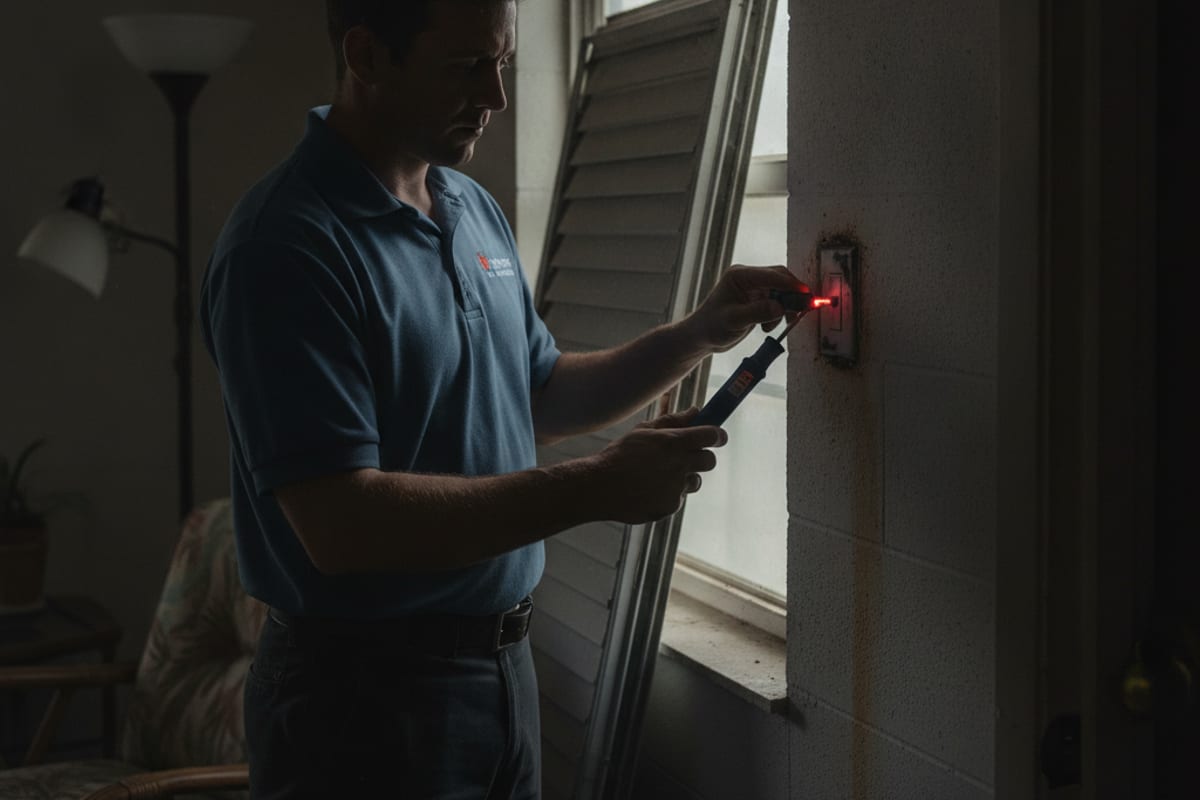
Electrical warning signs deserve attention when they affect more than one light, keep returning, or come with heat, discoloration, unusual sounds, odors, shocks or repeated breaker trips. Those symptoms can have several causes, so the safe next step is a qualified inspection rather than a diagnosis based on the home’s age or neighborhood.
If you see smoke or fire, leave the hazard area and contact emergency services. Don’t approach a wet or visibly damaged panel, remove electrical covers, or keep resetting a breaker that trips again.
Electrical warning signs to take seriously
The numbered list of flickering, repeated trips, heat, odor, shock and related signs lives on the Tampa electrical warning-signs guide. Use that post for the symptom-by-symptom recap. In New Port Richey, the local checks are which building department has the property and whether a dark house is a Duke Energy outage or a house fault.
If neighboring homes are also dark, confirm with Duke Energy before treating it as a house wiring problem. A single dark house with power next door is a different inspection.
After water reaches electrical equipment
If flooding, a roof leak or wind-driven rain reached a panel, receptacle, switch or junction box, don’t assume the equipment is safe because it still operates. Water exposure can affect components and connections in ways that aren’t visible from the outside.
Stay away from standing water near electrical equipment. Don’t touch a wet panel, remove covers or energize affected circuits to test them. After the immediate water hazard has been addressed, a qualified electrician can determine what was exposed and what needs repair or replacement.
What an electrical repair evaluation should cover
A useful evaluation starts with the symptoms and the affected part of the system. The electrician may need to determine:
- whether the problem is limited to one device or affects an entire circuit
- which loads were operating when the symptom appeared
- whether the issue is repeatable or intermittent
- whether conductors, connections or equipment show heat or water damage
- whether the existing device and circuit suit the equipment being used
- whether the problem is on the home’s side or requires utility involvement
Not every problem requires a complete rewire or panel replacement. An isolated device, a damaged section of wiring and a broader service issue are different scopes. Likewise, a panel with no open breaker spaces doesn’t automatically prove that the home needs more service capacity. Circuit space, service capacity, equipment condition and the home’s actual loads must be evaluated separately.
Permits, jurisdiction and licensing
Permit requirements depend on the work and the authority responsible for the property. New Port Richey city properties and nearby unincorporated Pasco County properties do not use the same permitting office. Confirm whether the address is inside city limits or unincorporated before anyone files. The selected contractor should identify that jurisdiction, determine whether the planned repair requires a permit and explain who will submit it.
Florida electrical licenses also have different scopes. Certified electrical contractors can work statewide, registered contractors work within their authorized local jurisdictions, and specialty licenses cover bounded types of work. Verify the status, scope and applicable jurisdiction of the business responsible for the job at myfloridalicense.com.
Tampa Electrical Pro is a referral service. We connect customers with independent licensed and insured electricians, while the selected contractor determines the diagnosis, scope, permits, scheduling, workmanship and price. Homeowners in Hudson, Trinity and surrounding communities can also review the New Port Richey service area.
Frequently asked questions
When does flickering need an electrician?
Use the Tampa warning-signs guide for the pattern. Arrange an inspection when flickering affects several fixtures or circuits, keeps returning, or appears with other electrical warning signs.
What should I do when a breaker keeps tripping?
Stop using the associated equipment and don’t keep resetting the breaker. The Tampa warning-signs guide covers the general trip pattern. If neighboring homes are also dark, confirm with Duke Energy before treating it as a house fault.
Does every electrical repair require a permit?
Permit requirements depend on the work and the property’s jurisdiction. A contractor should confirm the responsible permitting authority and the requirements for the actual repair rather than relying on a blanket rule for every device replacement.
What affects the scope and price of a repair?
The scope changes based on whether the fault is confined to a device, extends into the circuit or involves service equipment. Access to the wiring, the condition of conductors and connections, water or heat damage, equipment compatibility and any required permitting can also change the work. The selected contractor should base the price on the inspected condition and defined scope.
Can I handle a minor electrical repair myself?
Replacing a lamp doesn’t expose the home’s wiring. Work that requires opening a device box, removing a panel cover or handling conductors carries different risks. Leave panel work, recurring faults and anything involving heat, arcing, shocks, odors or water exposure to a qualified electrician.
If you’re noticing electrical warning signs in a New Port Richey home, Tampa Electrical Pro can connect you with an independent licensed and insured electrician who can inspect the affected system and explain the available repair options.