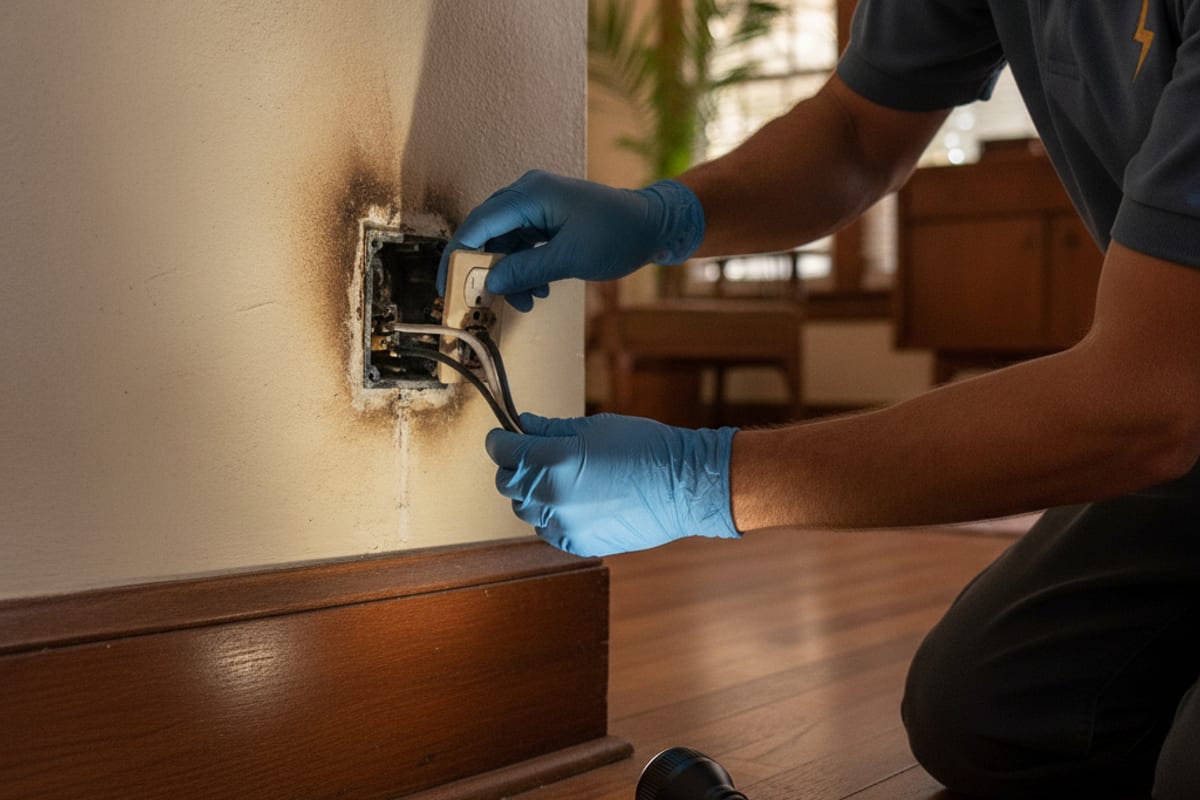
Residential electrical repair starts with identifying the actual fault. The visible symptom might come from a failed device, a damaged connection, a circuit problem, incompatible equipment, or an issue elsewhere in the electrical system. A qualified electrician needs to inspect the affected area before defining the repair.
That distinction matters when you are comparing recommendations. Replacing one accessible device is a different project from tracing an intermittent fault through several rooms, opening finished surfaces, repairing a branch circuit, or working inside the electrical panel.
What residential electrical repair can cover
Repair work addresses an existing problem, although the final solution may include replacing a failed component. Common calls involve:
- An outlet, switch, light, or ceiling fan that no longer works correctly
- A breaker that trips again during normal use
- Partial loss of power in a room or group of outlets
- Flickering or dimming that is unexplained, recurring, or affecting several areas
- A warm or discolored wall plate
- Buzzing, crackling, a burning odor, shocks, or visible damage
- Weather or moisture damage to equipment exposed outdoors
- Damaged conductors, connections, or electrical boxes found during an inspection
These symptoms do not identify their own cause. For example, a tripping breaker can be responding to an overloaded circuit, a fault in connected equipment, damaged wiring, or another condition. Replacing the breaker without determining why it operated can leave the real problem unresolved. Read more about why a breaker keeps tripping.
The same principle applies to a dead outlet. The failed device may be the problem, but the electrician may also need to check its connections, upstream protection, and other devices on the circuit. A plain receptacle without test and reset buttons can still be protected by an upstream GFCI, so its appearance alone does not establish whether protection is present.
Warning signs that need prompt inspection
Unexplained flickering or dimming, hot or discolored plates, buzzing or crackling, burning odors, shocks, and frequent breaker trips call for prompt inspection by a qualified electrician. Do not keep resetting a breaker to see whether the condition clears, and do not remove a panel cover or reach into wet or damaged electrical equipment.
If there is smoke or fire, leave the hazard area and contact emergency services. An electrical contractor can address the electrical system after the immediate danger has been handled. For other active electrical hazards, the site’s emergency electrician service page explains how to request help.
A symptom’s timing can help an electrician reproduce it, but timing alone does not prove the cause or whether the repair is minor. Note what was operating, which areas were affected, whether the condition recurs, and whether there was heat, odor, noise, or visible damage. Those observations are more useful than guessing which component failed.
Why a small symptom can lead to a larger repair
An electrician may begin at the visible problem and discover that the affected device is only one part of the scope. A damaged connection can affect conductors or nearby equipment. An intermittent outage may require tracing the circuit. A fixture replacement may reveal an unsuitable electrical box or damaged wiring. Outdoor equipment may need to be evaluated against its actual exposure and product instructions.
That does not mean every failed outlet requires rewiring or every tripping breaker requires a new panel. The repair should follow observed conditions and testing. Ask the contractor to separate:
- The immediate defect that must be corrected
- Related damage found during inspection
- Work required for the selected replacement or equipment
- Optional improvements that are not necessary to complete the repair
This breakdown makes competing proposals easier to compare and helps prevent an optional upgrade from being presented as the only repair.
Circuit space is not the same as electrical capacity
A panel can run out of physical breaker spaces without proving that the electrical service lacks capacity. A subpanel can provide additional circuit spaces, but it does not increase the amount of utility power available to the property.
Conversely, open breaker spaces do not prove that a new large load can be added. The electrician needs to consider the existing loads, the proposed equipment, the service, and the applicable calculation before recommending a new circuit or service change.
The same care applies when a breaker trips. A trip on one circuit does not by itself establish that the entire home’s service is undersized. The circuit, connected equipment, and broader electrical system should be evaluated before drawing that conclusion.
What determines repair scope and cost
This site’s published diagnostic range is $75 to $150, usually credited toward the repair. Electrical repair including that diagnostic visit is published at $150 to $450. There is no reliable Tampa Bay flat price for residential electrical repair without an identified scope. The selected contractor determines pricing based on the work found at the property. Important variables include:
- Whether the fault is already located or must be traced
- Whether one device or several connected locations are affected
- Access to boxes, conductors, ceilings, attics, crawlspaces, or finished walls
- The condition of the existing wiring and connections
- Whether replacement equipment is compatible with the circuit, box, support, and controls
- Whether the work involves the panel, service equipment, or utility coordination
- Whether damaged finishes must be opened or restored
- The property’s permitting jurisdiction and inspection requirements
An accessible device replacement and an intermittent fault hidden behind finished surfaces may produce the same initial symptom but require very different work. A useful proposal should identify what is included, what remains uncertain, and what finding would change the scope.
The same diagnostic approach applies to specialized equipment. For example, investigating a well pump breaker that keeps tripping begins with the circuit, connected equipment, and observed fault rather than an automatic parts replacement.
Repair, replacement, and installation
These terms can overlap:
- Repair corrects an existing electrical problem.
- Replacement removes a failed or unsuitable component and installs another in its place.
- Installation adds equipment, wiring, or a circuit that was not previously there.
A failed switch may be corrected through replacement. A damaged conductor may require a wiring repair before a new device can be installed. Adding a circuit for new equipment is installation work even if the project began with a complaint about the old setup.
The distinction matters because access, electrical calculations, permitting, and inspection can change with the scope. It is more useful to ask what work is being performed than to rely on the label attached to the proposal.
Permits and contractor qualifications
Permit requirements depend on the exact work and the authority that governs the property. Tampa Bay includes multiple cities and county jurisdictions, so a mailing address does not always identify the correct building department. Ask the selected contractor which authority applies, whether the proposed scope requires a permit, and who will coordinate any required inspection.
Florida electrical licensing also includes different contractor categories and scopes. A certified electrical contractor can work statewide, while a registered contractor works within authorized local jurisdictions. Specialty licenses have limited scopes. The relevant checks are whether the contracting business has active authority for the proposed work and whether that authority applies at the property.
Tampa Electrical Pro is a referral service. We connect property owners with independent licensed and insured electricians. The selected contractor performs the inspection, defines the scope, handles applicable permit questions, and provides the price and scheduling terms.
Residential repair FAQ
Can I replace a failed outlet myself?
A dead outlet does not establish that the receptacle itself is the only problem. Heat, discoloration, odor, buzzing, visible damage, or repeated loss of power can point to a condition that requires inspection beyond a device swap. Do not remove panel covers or work on wet or damaged electrical equipment. A qualified electrician can determine whether the repair is limited to the device or involves the circuit and its connections.
How long does a residential electrical repair take?
The contractor cannot determine that reliably from the symptom alone. Access, fault tracing, connected equipment, concealed damage, replacement-part compatibility, permitting, and inspection can all affect the schedule. Ask what can be confirmed during the first visit and what findings could require additional work.
Does every electrical repair require a permit?
No single answer applies across every repair and Tampa Bay jurisdiction. The location and exact scope determine which authority applies and whether a permit or inspection is required. Have the selected contractor identify the governing department and explain how permitting is addressed in the proposal.
Should I replace the panel if there are no spare breaker spaces?
Not automatically. Full breaker spaces and insufficient service capacity are different conditions. A subpanel may add circuit space but does not increase utility capacity. The electrician should evaluate the existing service, actual loads, proposed work, and equipment requirements before recommending a panel or service change.
How should I compare repair proposals?
Compare the diagnosed condition, included work, exclusions, access assumptions, equipment, permit responsibility, and what could change the price. If recommendations differ, ask each contractor to explain the observations or test results behind the proposed scope. The lowest total is difficult to evaluate when the proposals are solving different problems.
Get connected with an electrician
If you have unexplained flickering, repeated trips, heat, discoloration, buzzing, burning odor, shocks, loss of power, or another electrical concern, request an electrical repair. Call (813) 850-0320. Tampa Electrical Pro can connect you with an independent licensed and insured electrician serving your area. The contractor will inspect the property and confirm the repair, price, scheduling, and any permit requirements.