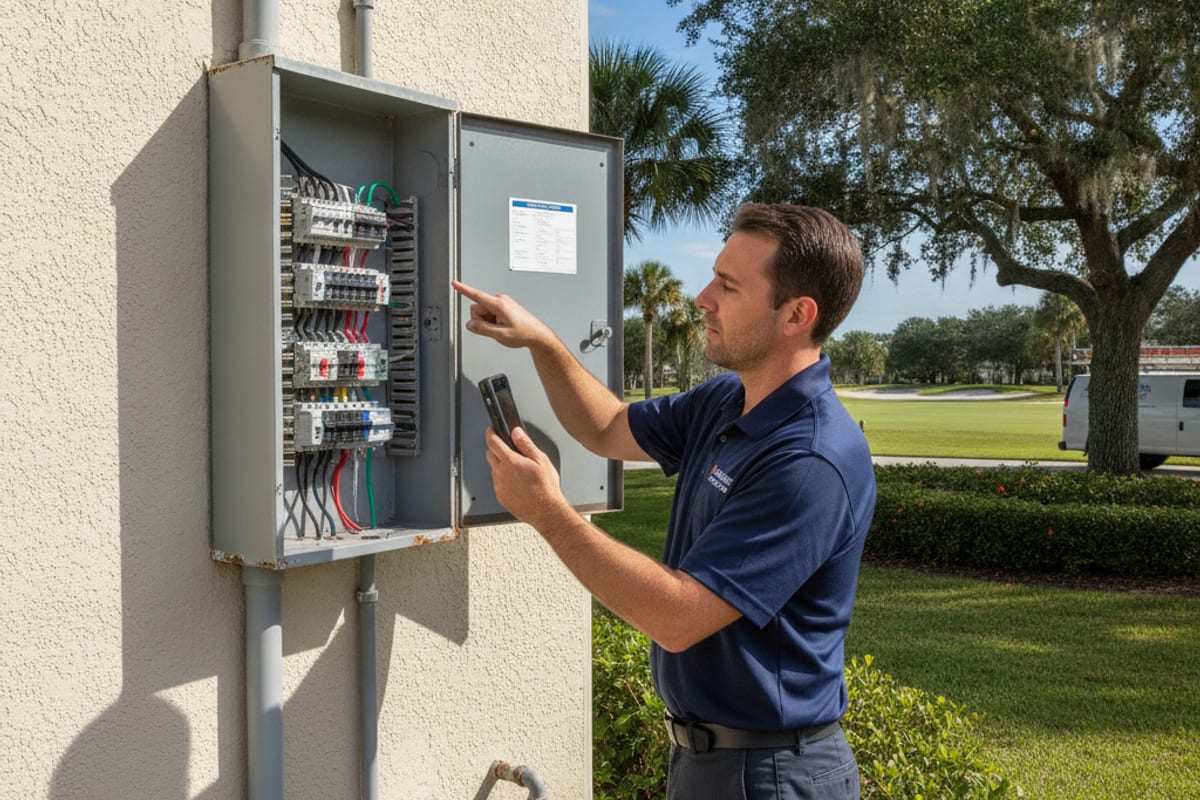
Choosing a generator contractor in Palm Harbor starts with the system you want to power. A fixed standby generator connected to house wiring is different from a portable generator powering individual appliances through properly rated outdoor cords. The contractor should understand that distinction, identify the loads you want available during an outage, inspect the existing electrical equipment, and provide a written scope before equipment is selected.
Verify the electrical contractor’s authority to do the work
Florida has more than one lawful electrical contractor category. A certified electrical contractor can work statewide, a registered contractor works within authorized local jurisdictions, and specialty licenses have limited scopes. Ask for the contracting business’s license information, then verify its active status, scope, and jurisdiction through the Florida Department of Business and Professional Regulation.
The relevant question isn’t whether every person arriving at the property holds an EC license. It is whether the business responsible for the electrical work is properly authorized for that work and jurisdiction, and who will supervise and stand behind the installation.
Tampa Electrical Pro is a referral service. We connect Palm Harbor customers with independent licensed and insured electricians. The selected contractor determines the design, permits, schedule, price, and workmanship terms.
Confirm the permitting authority for the property
Pinellas County states that work changing a home’s electrical system requires a permit. The exact permitting authority still depends on the property’s jurisdiction, so a mailing address alone shouldn’t be used to decide where an application belongs.
Ask the contractor to identify the authority having jurisdiction and show these items in the written scope:
- Who prepares and submits the permit application
- Which electrical and fuel-related inspections apply to the proposed system
- Whether utility coordination is needed for the selected design
- Who responds if an inspector requests a correction
- Whether permit and inspection charges are included in the proposal
A permit or inspection documents a particular review. It isn’t a substitute for clear equipment specifications, qualified installation, or written warranty terms.
Check property restrictions without assuming them
An association may regulate the placement or appearance of exterior equipment, but the requirements come from the documents governing that particular property. Being in Lansbrook, East Lake, or another Palm Harbor community doesn’t establish the approval process by itself.
If the property is governed by an association, check its current documents or contact its manager before approving a location. Ask whether drawings, equipment dimensions, screening details, sound information, or owner authorization are required. The contractor should also compare the proposed location with the generator manufacturer’s instructions and the requirements identified during local review.
Don’t rely on a contractor’s experience in a nearby community as proof that the same rules or review time apply to your property.
Separate backup-load planning from panel capacity
A generator supplies selected loads when utility power is unavailable. It doesn’t add a new appliance load to the utility service simply by being installed. Generator sizing and electrical service capacity are related design questions, but they aren’t the same calculation.
Start with an essential-load list. Identify what must operate during an outage, what can remain off, and which equipment has a meaningful startup demand. Cooling equipment, pumps, refrigeration, lighting, communications equipment, and medical needs can affect the plan, but the actual equipment labels and operating requirements matter more than assumptions about a neighborhood or home size.
The contractor should inspect the service equipment, panel labeling, available circuit spaces, connected loads, conductor routing, and the equipment proposed for backup. A panel with no open breaker spaces doesn’t automatically need a service-capacity increase. A subpanel can provide additional circuit spaces, but it doesn’t increase the capacity of the electrical service. Likewise, a panel’s ampere rating alone doesn’t prove that a panel upgrade is required for a generator.
Ask the contractor to explain separately:
- How the proposed generator output was selected
- Which circuits or loads will receive backup power
- How startup demands will be managed
- Whether the project needs more circuit space, a different equipment arrangement, or an actual service change
- What observation or calculation supports any recommended panel work
Understand transfer isolation
A generator must not send power back onto utility lines. For a fixed whole-home generator system, professionally installed transfer equipment isolates the home from the utility before the generator supplies the selected loads.
Automatic transfer equipment can move the connected loads to generator power without someone operating the switch manually when the configured standby system responds to an outage. Manual transfer equipment requires someone to perform the transfer. Either approach must match the generator, electrical equipment, intended loads, and installation instructions.
Portable-generator use is a separate case. Tampa Electric advises that a portable generator may power individual appliances through properly rated outdoor cords. Directly backfeeding house wiring is unsafe, and turning off the main breaker isn’t a substitute for proper transfer isolation.
A useful proposal identifies the transfer equipment by manufacturer and model, states which circuits it serves, and explains how normal utility power and generator power remain isolated.
Include fuel, exhaust, and outage planning
Generator planning isn’t only an electrical question. The proposal should identify the fuel source, equipment location, exhaust considerations, maintenance responsibilities, and the loads the available fuel is expected to support.
Fuel-burning generators create carbon monoxide, fire, and electrical hazards. The Consumer Product Safety Commission says portable generators belong outdoors, far from the house and away from openings. They should never operate in a home, garage, crawlspace, basement, or shed. Fixed standby-generator clearances come from the instructions for the listed equipment and local review, not from a generic portable-generator rule.
Outage restoration depends on actual damage and repair complexity. A backup plan should therefore include maintained equipment, an available fuel plan, and a defined essential-load list rather than a promise about how quickly utility power will return.
Compare written scopes, not headline prices
Two proposals can describe the same generator while covering very different work. Compare what each contractor has actually included instead of treating the equipment name as the whole project.
The written proposal should address:
- Generator and transfer-equipment manufacturer and model
- Circuits or loads included in the backup plan
- Electrical routing and access assumptions
- Fuel-system work and who performs it
- Pad, mounting, protection, and equipment-location responsibilities
- Required panel, disconnect, or circuit work
- Permit, inspection, utility, and association responsibilities
- Startup, operating instructions, and owner handoff
- Manufacturer warranty and separate contractor workmanship terms
- Payment milestones and the process for approving a scope change
If one proposal recommends additional electrical work, ask what observed condition or calculation supports it. That answer is more useful than a broad claim that an older panel or full breaker layout always requires an upgrade.
Questions to ask before hiring
Use the same questions with each contractor so the proposals are easier to compare:
- What license authorizes the electrical contracting business to perform this work here?
- Which loads will the generator serve, and how did you choose the generator output?
- What transfer equipment will isolate generator power from utility power?
- Does the plan require more circuit space, a service-capacity change, or neither?
- Which permitting authority serves this property, and who handles the application and inspection?
- Who is responsible for fuel-system work and equipment-location approval?
- What isn’t included in the proposal?
- What manufacturer and workmanship warranty terms will I receive in writing?
- What maintenance and testing does the selected equipment require?
- How will changes be documented and approved before additional work begins?
Get matched with a Palm Harbor electrician
Tampa Electrical Pro can refer you to an independent licensed and insured electrician serving Palm Harbor. Share the equipment you’re considering, the loads you want during an outage, and any property or association documents you already have. The selected contractor can then inspect the site and define the design, permitting, price, and schedule.
FAQ
Does a standby generator require an electrical permit in Palm Harbor?
Pinellas County says work changing a home’s electrical system requires a permit. The contractor should confirm the correct permitting authority for the property and identify the required reviews in the written scope.
Does a generator automatically require a panel upgrade?
No. The electrician must distinguish generator output, utility-service capacity, and available circuit space. A full panel may need a different circuit arrangement or added spaces, but that condition alone doesn’t prove the electrical service needs more capacity.
What determines the right generator size?
The decision begins with the loads that need backup power, their operating and startup demands, and how the system will manage them. Fuel availability, transfer equipment, equipment instructions, and the existing electrical system also affect the design.
Can a portable generator be connected to the house?
It must not be directly backfed into house wiring. Portable generators can power individual appliances through properly rated outdoor cords. Supplying house circuits requires professionally installed equipment that isolates generator power from the utility.
What’s the difference between automatic and manual transfer equipment?
Automatic equipment can transfer the configured loads without a person operating the switch when the standby system responds to an outage. Manual equipment requires user action. Both must be compatible with the generator, the intended loads, and the home’s electrical equipment.
Does an association always need to approve a generator?
Not necessarily. Review the documents governing the specific property and confirm any current exterior-equipment process with the association. Community names alone don’t establish the placement rules, required documents, or review schedule.