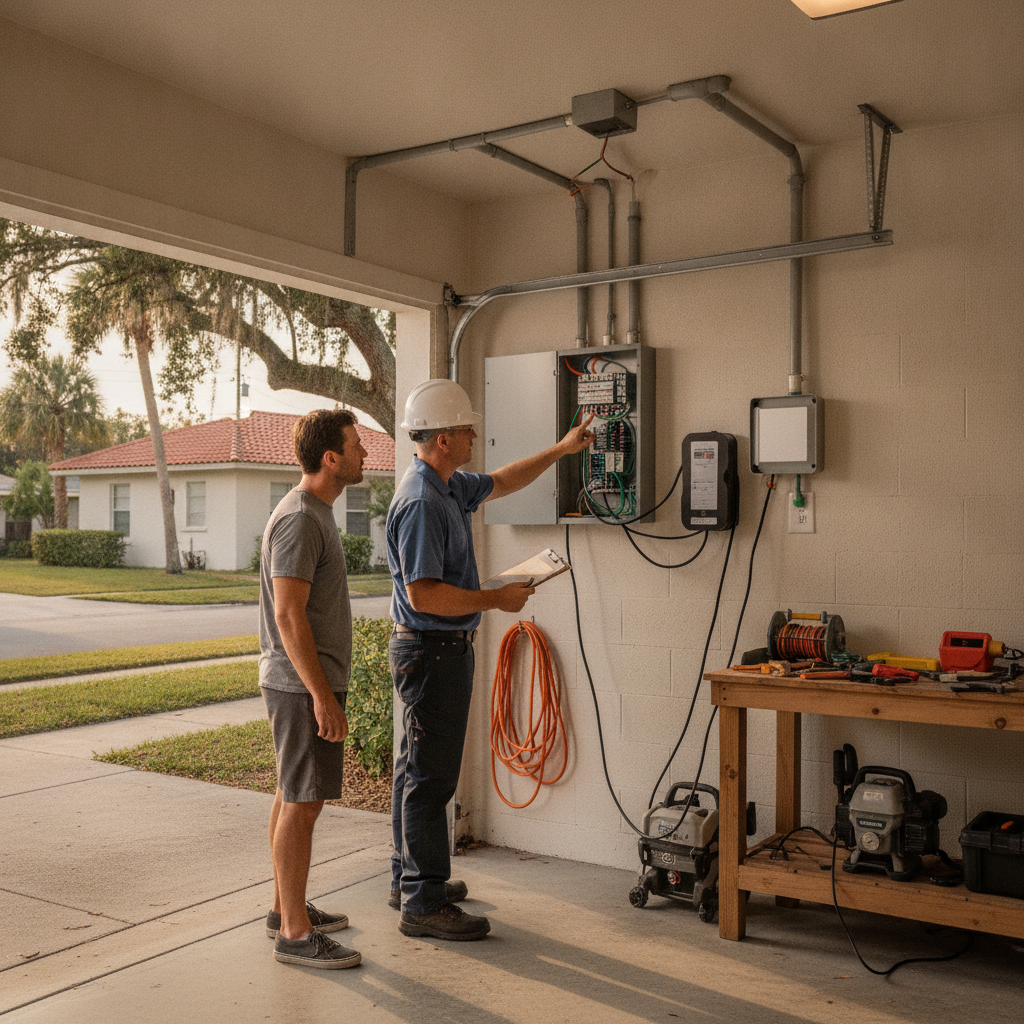
An electrical permit follows the house, not the city printed on a water bill. If you are adding a circuit, changing a panel, or wiring a charger on a Riverview garage wall, a licensed electrician confirms the office that actually reviews that parcel and files there. Tampa Electrical Pro matches homeowners with independent licensed and insured electricians. Those electricians pull the permit. This brand does not.
What Hillsborough and the City of Tampa treat as permit work
The reviewing office is the one that covers the property. A South Tampa bungalow inside city limits and a Brandon house in unincorporated Hillsborough do not sit in the same queue, even when both owners say they live in Tampa. A mailing city is not the test. The parcel is.
Pinellas works the same way, with an extra split. Pinellas County reviews unincorporated addresses and specified partner cities. Largo runs its own Building Division and its own LCAP permit process, so a Largo house does not automatically go to the county. Temple Terrace publishes its own electrical application forms. Use that city office for a Temple Terrace property, not an unincorporated Hillsborough referral.
None of those offices publishes a single list that covers every swap, every exemption, and every wait time. A like-for-like fixture on the same cable is a different job from a new homerun to the panel. Changing service equipment is a different job again, because the utility’s metering gear and the house wiring meet at the meter. The electrician reads the actual scope at the house, then asks the office for that address what they want on paper.
Florida licensing sits underneath that filing. Certified electrical contractors may work statewide. Registered contractors work only in the local jurisdictions they are authorized for, and specialty licenses have a bounded scope. EC is not the only lawful category for electrical work, and not every person on a job holds a contractor license. The business that files needs active status, the right scope, and standing in the jurisdiction that covers the house.
On a job we refer, the licensed electrician confirms the permit and inspection steps with the authority for that address. Tampa Electrical Pro does not file, does not schedule the inspector, and does not own the license. The selected contractor sets the fee conversation too. The reviewing authority prices the permit from the scope on the application. There is no honest flat number that fits City of Tampa, unincorporated Hillsborough, Largo, and a Pasco address at once.
Cosmetic work is the easy contrast. Paint, a shelf, a cabinet, a rug. Those do not re-route power. The moment the job adds a path, changes capacity, or ties new equipment into the panel, you are in the conversation the building office exists to have.
Panel, EV, and new circuits
A new circuit, a panel change, and a charger share one fact: they alter how power is divided in the house. That is why the electrician is talking to the building office instead of only swapping a device on a live cable.
A panel upgrade is a capacity and space problem, and those are two different problems. Service capacity is how much the utility drop and the main equipment can carry. Circuit space is whether the panel still has room for the next breaker. A 100 amp to 200 amp upgrade is one common shape of that work. This site’s published range for that upgrade is $2,500 to $4,500. That figure is this site’s published range, not a Tampa average and not a quote. It is not a claim that every house needs 200 amp service. The selected contractor prices the job after seeing the existing gear, the route, and what the utility will accept at the meter.
Tampa Electric’s own rules matter when the work touches metering. The customer provides the meter socket. The company designates the location for new work and for a relocation or upgrade of existing metering equipment. Customers are not allowed to make connections to or disconnections from Tampa Electric equipment. After a storm, Tampa Electric is responsible for damage to the meter and the service line, and the customer is responsible for the weatherhead, riser, and meter box. Fair-weather rust or a burned enclosure is a separate conversation. The electrician coordinates with the utility. Nobody on the homeowner side taps a pole.
An EV charger is a continuous 240 volt load. Level 1 can cover daily driving for some drivers when the circuit and overnight park time actually fit. Level 2 uses 240 V, and the vehicle, daily range, and parked time decide which setup belongs on that wall. Outdoor use needs outdoor-rated equipment. A smart charger’s app does not prove the panel can carry the load. This site’s published range for charger installation when existing panel capacity is adequate is $1,200 to $2,000. That band does not cover a service upgrade, and a panel upgrade is not automatic from a charger quote. A charger on the far wall of a Riverview garage, with the panel on the other side of the house, means a long 240 volt run. The conduit and conductor for that run are most of the labour.
A new kitchen circuit, a dryer outlet, a well pump at the end of an Odessa garage, or power to a detached shop is the same family of work: a new path, a new overcurrent device, and a load the panel has to absorb. Replacing a range on an existing circuit is not the same job as pulling a new homerun.
A standby generator is permitted work because it has to isolate the house from the utility. Fixed standby equipment is professionally installed with transfer isolation. Portable generators power individual appliances through properly rated outdoor cords. Direct backfeeding into house wiring is unsafe. Fuel-burning generators still make carbon monoxide, fire, and electrical hazards. A Palm Harbor HOA rule can decide where a pad may sit. That is a siting fact, not an electrical diagnosis of the house. This site’s published range for a whole-home generator, installed, is $10,000 to $18,000, again as a site-published band, not a local average.
| Job | What changes in the house | What moves the scope | | New 240 volt charger circuit | A dedicated run and a continuous load | Panel space, path length, indoor or outdoor listing | | Panel or service change | How much the house can carry, and how it is divided | Existing equipment, meter socket, utility coordination | | Standby generator | Backup power with the utility isolated | Transfer equipment, fuel, essential-load list, pad location |
What an inspector looks at on a residential job
The inspector is checking the work that was filed, not giving the house a medical exam. They compare what was built to what the permit described: the path, the equipment that was listed for that exposure, and the connections that have to stay visible until they say otherwise.
Concealed work is the practical hinge. A new homerun inside a Hyde Park plaster wall cannot be judged after the plaster is closed. The electrician leaves that work open for the inspection the office scheduled. A surface-mounted garage charger is a different kind of look, because the run is still in view.
On a charger job they are looking at the circuit that was installed, the listing of the equipment, and whether outdoor gear is actually outdoor-rated. On a panel job they are looking at the equipment that was set, how it is identified, and whether the utility’s metering side was left to the utility. On a generator job they are looking at transfer isolation. Turning the main breaker off is not backfeed protection.
They are not there to decode a burning odor, unexplained flicker, heat, or arcing from a photo. Those signs call for a qualified inspection of the system, and smoke or fire means leaving the hazard area and contacting emergency services. An inspector on a permit is a different visit from an emergency.
Fees and calendar dates belong to the office. Workload changes. A City of Tampa residential circuit and a Pasco outbuilding run do not share a published stopwatch in any source this page can stand on. The electrician who filed the job is the person who knows what that office wants for that address this month.
How do electrical permits work in Tampa Bay?
The licensed electrician describes the work, files with the office that covers the parcel, and calls for the inspections that office requires. The brand that referred the electrician does not file. The property address picks the office. City of Tampa, unincorporated Hillsborough, Largo, Temple Terrace, and Pinellas County are not interchangeable counters.
Who files an electrical permit in Florida?
On work we refer, the licensed electrician files. Florida certified contractors may work statewide. Registered contractors are limited to the local jurisdictions they are authorized for, and specialty licenses stay inside their bounded scope. The reviewing office for that address is the one that says who may sign the application. This brand never pulls the permit.
How much does an electrical permit cost in Tampa?
The reviewing authority sets the fee from the scope on the application. It is not a single metro price, and it is not bundled into this site’s published ranges for panel, charger, or generator labour. Ask the electrician who is filing what that office is charging for the job they described.
When to call us
Call when the job adds a circuit, changes a panel, wires a charger, or ties in standby equipment with transfer isolation. Those are licensed electrical jobs, and the electrician who does them is the one who confirms the permit and inspection steps for that address. Call us at (813) 850-0320.