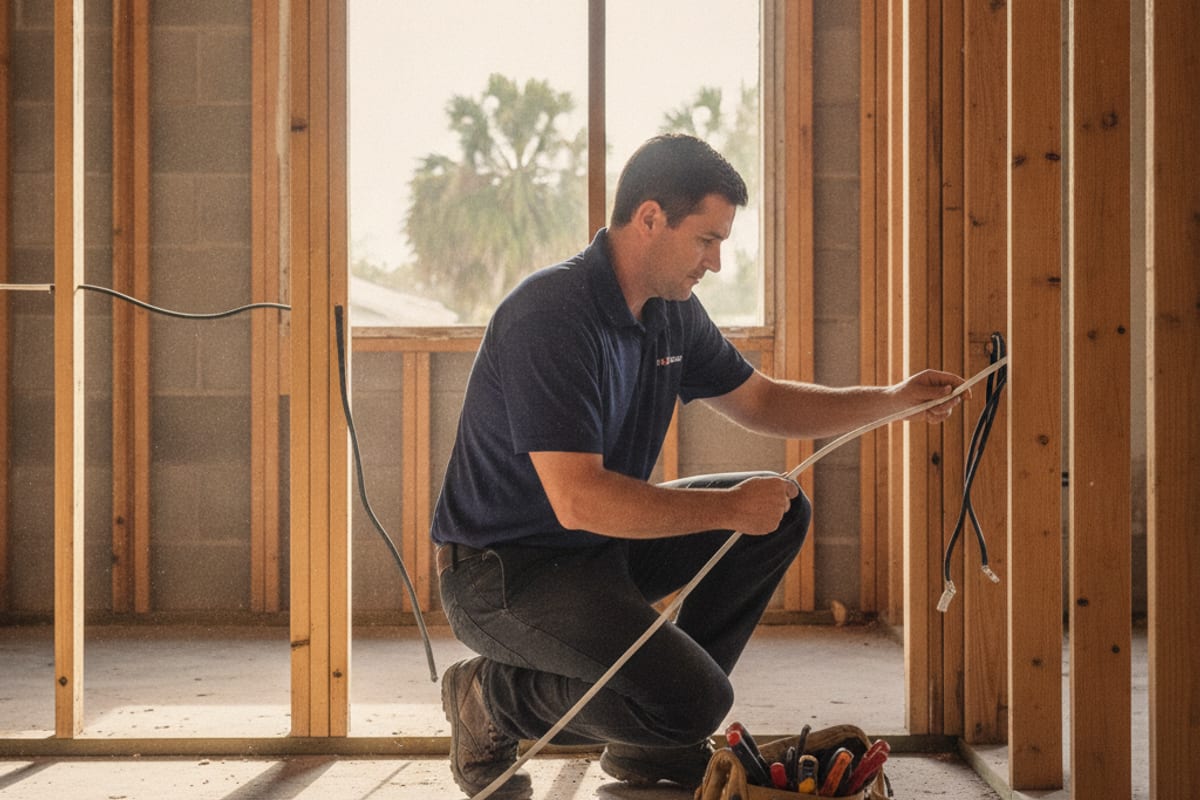
Electrical installation in Largo starts with the intended equipment and the home’s existing system. The electrician must evaluate the available capacity, circuit needs, wiring route, access, controls, and installation environment. Permit and inspection requirements depend on the project and the authority responsible for the property.
Tampa Electrical Pro connects Largo customers with independent licensed and insured electricians. The selected contractor determines the installation method, scheduling, permits, workmanship, and price after reviewing the actual scope.
How is electrical installation in Largo planned?
Good planning begins with a clear description of what you want to power. A replacement fixture, an added receptacle, a new appliance circuit, and a larger service project create different electrical and access needs.
The electrician may need to examine:
- Whether the project can use an existing circuit or needs a new one
- The intended appliance, fixture, charger, fan, or control
- Available electrical capacity and compatible equipment
- The route from the panel to the installation area
- Attic, crawlspace, wall, ceiling, or exterior access
- Finished surfaces that could limit the wiring route
- Indoor, damp, wet, or exposed outdoor conditions
- Required support, switching, dimming, timers, or smart controls
- Utility coordination, power interruption, permits, and inspection
These details help define the work without assuming that every installation needs a new circuit or panel.
Planning new receptacles and circuits
Start with what will use the receptacle. Portable devices, kitchen equipment, workshop tools, and fixed appliances can place different demands on a circuit. The electrician checks the existing circuit, connected loads, panel information, and proposed location before choosing a route or protection method.
GFCI protection addresses shock hazards, while overcurrent and AFCI protection serve different purposes. Protection may come from a receptacle or another device upstream. A receptacle without test and reset buttons does not prove that the circuit lacks GFCI protection. The qualified installer should identify the actual protective devices and match the installation to its location.
Outdoor planning also depends on exposure. Equipment should be suitable for the conditions where it will be installed, and connections need protection from weather and physical damage. The Electrical Safety Foundation International outdoor safety guide explains the distinct roles of GFCI, AFCI, and overcurrent protection.
What changes a fixture or ceiling fan installation?
An existing ceiling light does not establish that its electrical box can support a fan. The box needs the appropriate fan rating and secure structural attachment, and the fan’s mounting instructions govern the installation. Ceiling access, new wiring, support, controls, and the selected fan can all change the scope.
The Hunter Fan support guide explains why a fan-rated box and secure attachment matter. The installer should de-energize the circuit and verify its condition before working on the box or wiring.
Lighting projects also require more than choosing a fixture. Useful planning questions include:
- Will the fixture use an existing switch or need another control?
- Is the selected dimmer compatible with the light and driver?
- Can wiring reach the location without unnecessary surface damage?
- Does the ceiling or wall provide suitable support?
- Is the fixture listed for the actual indoor or outdoor exposure?
Recessed, track, under-cabinet, and decorative lighting can use different wiring and mounting methods. The total connected load and existing circuit matter more than the number of fixtures alone.
Choosing outdoor and landscape lighting
Landscape lighting can use line-voltage equipment or a low-voltage system supplied through compatible equipment. Neither choice is automatically brighter, longer-lasting, or better for every yard. Fixture design, layout, controls, wiring route, exposure, and maintenance needs affect the decision.
Before installation, identify what needs illumination and where people walk, park, gather, or maintain landscaping. The electrician can then evaluate supply locations, cable protection, controls, and exposure to rain or irrigation. Timers, photocells, and compatible smart controls can automate operation, but they still need to match the lighting system.
Does a new load require a panel upgrade?
Not necessarily. A panel’s labeled amperage or remaining breaker spaces cannot answer the question alone. The electrician evaluates the existing service, connected loads, proposed equipment, panel condition, and installation requirements.
This is especially important when planning an EV charger installation, air-conditioning equipment, a hot tub, or another substantial load. Level 2 charging uses 240-volt power, while the vehicle, daily driving needs, parked time, and electrical capacity affect the appropriate charging choice. Charging is a continuous electrical load, so the manufacturer’s instructions and applicable requirements govern the installation. The Department of Energy home-charging guide provides additional planning information.
If the evaluation shows that the current equipment cannot support the project, a panel upgrade may become part of the scope. That can involve utility coordination, a planned power interruption, permitting, and inspection. The contractor should explain which observed conditions support the recommendation.
Which permitting authority handles a Largo property?
Largo operates its own Building Division and LCAP permit process. Pinellas County serves unincorporated areas and certain partner communities, so a Largo mailing address alone does not identify the correct authority.
The contractor should confirm the property’s jurisdiction and the project-specific requirements before work begins. The official City of Largo permit resources and Pinellas County building department directory provide starting points. They do not establish that every fixture or device replacement follows the same permit path.
Permit review, utility involvement, access, material availability, and inspection can affect scheduling. Ask the selected contractor to separate the work sequence from dependencies controlled by the authority or utility.
Preparing for an installation estimate
A useful estimate starts with accurate project information. Share equipment labels or model numbers when available, along with photos of the panel, proposed location, nearby access, and finished surfaces. Explain whether the project replaces existing equipment or adds a new load.
The written scope should identify the equipment, wiring route assumptions, access, controls, surface repairs, permit responsibility, inspection steps, and any expected power interruption. Pricing belongs to the selected contractor because those conditions cannot be established from the project name alone.
For flickering, burning odors, hot or discolored plates, shocks, buzzing, or repeated trips, the priority is fault evaluation rather than planning an upgrade. See the guide to electrician services in Largo for help separating installation planning from an existing electrical problem. If there is smoke or fire, leave the hazard area and contact emergency services.
Frequently asked questions
How do I know whether a new receptacle needs a new circuit?
The electrician must evaluate the intended load and the existing circuit. Available breaker space alone does not confirm usable electrical capacity or circuit suitability.
Does adding an EV charger always require a panel upgrade?
No. The decision depends on the vehicle charging plan, existing electrical capacity, connected loads, equipment requirements, and the installation design.
Can an existing light box support a ceiling fan?
Only if the box has the appropriate fan rating and secure structural attachment. The presence of a ceiling light does not prove that the box can support a fan.
Does every electrical installation in Largo need a permit?
Requirements vary by project and jurisdiction. The contractor should identify the authority serving the property and confirm the current requirements for the specific scope.
What should I compare in electrical installation estimates?
Compare the defined scope, equipment, circuit plan, wiring route, access assumptions, controls, surface repairs, permit responsibility, inspection steps, and power-interruption needs.
Plan the next step
For electrical installation in Largo, call Tampa Electrical Pro at (813) 850-0320. We connect customers with independent licensed and insured electricians who can review the property and define the project-specific scope.