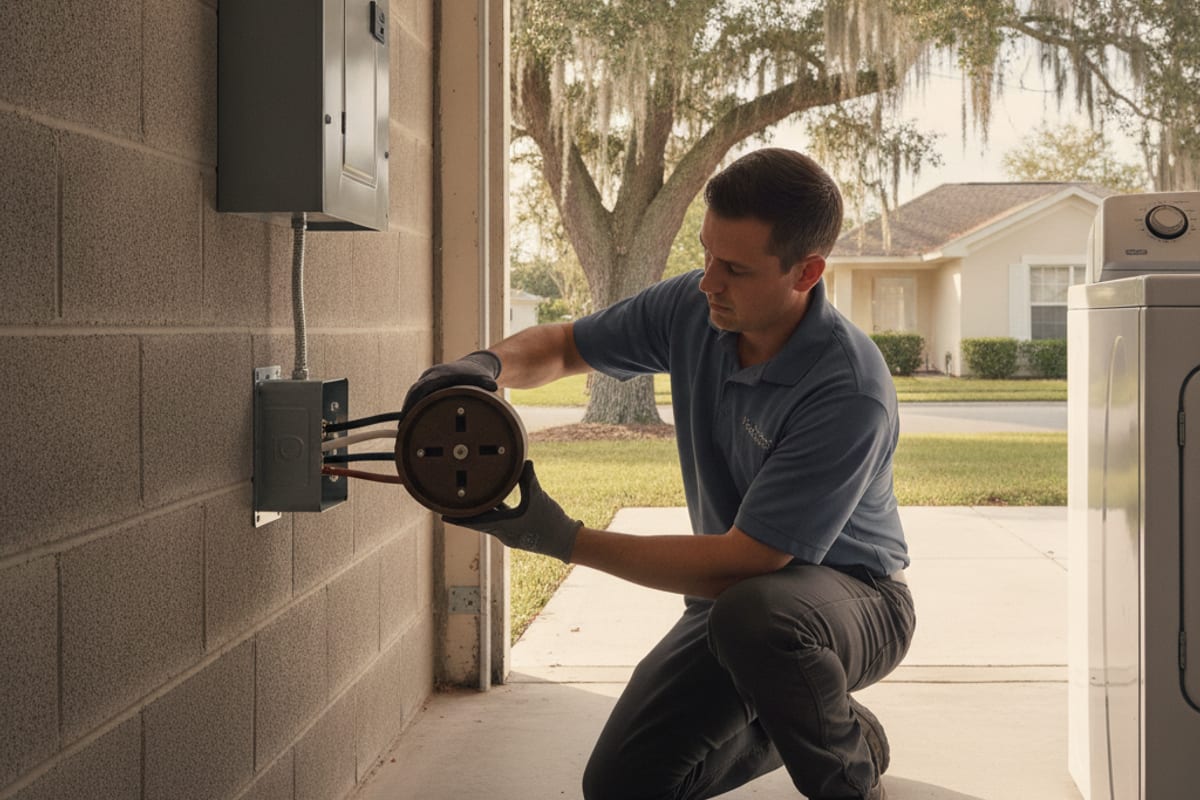
A bad electrical outlet may feel warm, spark repeatedly, buzz, smell burned, hold plugs loosely, or stop supplying power. Stop using it if you notice heat, scorching, melting, a burning odor, or repeated sparking. If there is smoke or fire, leave the hazard area and contact emergency services.
What are the clearest signs that an outlet is bad?
Some outlet failures are obvious. Others appear as intermittent problems that can resemble an appliance or cord failure.
Watch for these warning signs:
- The outlet feels warm or hot.
- Plugs slip out, sag, or no longer fit securely.
- The faceplate or receptacle has cracks, dark marks, or melted areas.
- You hear buzzing, sizzling, crackling, or popping near the outlet.
- Power cuts in and out when the plug or cord moves during normal use.
- The outlet smells burned or shows signs of arcing.
A small, momentary spark can occur as a plug makes contact, but repeated, large, or lingering sparks call for qualified inspection. Worn contacts, a damaged receptacle, or a loose connection are possible causes, but the symptom alone does not identify the fault.
Do not touch an outlet, plug, or connected equipment that is hot, smoking, melted, or visibly damaged. If the circuit can be shut off from a dry, undamaged panel that is safely accessible, turn off the appropriate breaker. Do not approach a wet or damaged panel or remove any covers.
Does a dead outlet always mean the outlet failed?
No. A dead outlet can result from the receptacle, a tripped breaker, an upstream GFCI device, a loose connection elsewhere on the circuit, or a problem with the appliance.
If the outlet is dry, visibly undamaged, cool, and free of unusual odors or sparking, unplug connected items and check nearby outlets. This can show whether the problem affects one receptacle or a larger part of the circuit.
A GFCI device can protect ordinary-looking outlets farther along the circuit, so the affected receptacle may not have its own test and reset buttons. Look for a tripped GFCI in nearby bathrooms, kitchens, garages, laundry areas, or outdoor spaces. Reset it only when the device and surrounding area are dry, there is no visible damage, and no other warning sign is present.
You can also inspect the electrical panel from the outside for a breaker sitting between its normal positions, provided the panel is dry, undamaged, and safely accessible. If a breaker trips again after one reset, stop resetting it. Our guide to a breaker that keeps tripping explains why repeated trips need further investigation.
How can I test an outlet without opening it?
Limit basic testing to an outlet that is dry, cool, visibly undamaged, and showing no burning odor, buzzing, smoke, or repeated sparking.
A plug-in outlet tester can identify several common wiring conditions without removing the faceplate. Insert it normally and compare its lights with the tester manufacturer’s instructions. A tester result is only one clue. It cannot prove that every connection is secure or that the receptacle is safe under load.
A small lamp that is known to work can also confirm whether the outlet supplies power. Do not use this test on a loose, cracked, scorched, hot, or damp receptacle. If the lamp flickers during ordinary insertion or removal, stop using the outlet. Do not bend, push, or repeatedly wiggle the plug to reproduce the fault.
Do not remove the faceplate, open the box, or touch wiring. Switching off a breaker does not by itself verify that every conductor in the box is de-energized.
Why does the plug feel loose in the outlet?
A plug that no longer stays seated can indicate worn internal contacts. The contacts should grip the plug blades securely enough to maintain a stable connection.
Poor contact can produce intermittent power, heat, or arcing. Replacing an appliance cord will not repair worn contacts inside the wall receptacle.
Do not bend plug blades or use an adapter to make the plug fit more tightly. Stop using the receptacle and have a licensed electrician evaluate the device and check the box for heat or wiring damage.
Why is my outlet warm?
Noticeable warmth deserves investigation, especially when it is accompanied by discoloration, odor, buzzing, or an unstable connection. Possible causes include worn contacts, a loose connection, a failing device, or a circuit problem. The temperature alone cannot identify which condition is present.
Stop using an outlet that is hot, smells burned, or shows discoloration. Do not touch or unplug equipment that is already hot, smoking, or visibly damaged. If the panel is dry, undamaged, and safely accessible, switch off the affected circuit without opening the panel.
Moisture can also damage outdoor or damp-location electrical equipment. Weather exposure, the condition of the cover, the equipment’s rating, and any upstream protection all matter. GFCI outlet installation can provide shock protection where appropriate, but the absence of test and reset buttons on one receptacle does not prove that it lacks upstream GFCI protection.
When should an electrician inspect the outlet?
Arrange a qualified inspection when an outlet is hot, scorched, cracked, loose, buzzing, sparking repeatedly, or losing power intermittently. Inspection is also appropriate when one reset does not restore dependable power or when several outlets on the same circuit behave unexpectedly.
The visible receptacle may be the failed device, or it may be where a problem elsewhere on the circuit becomes noticeable. A licensed electrician can evaluate the receptacle, circuit wiring, grounding path, box condition, and upstream connections without relying on the symptom alone.
Older components can require closer examination, but a home’s age or neighborhood does not establish what wiring is present or what failed. If the trouble affects multiple locations, professional electrical repair troubleshooting can trace the circuit beyond the first dead receptacle.
Frequently asked questions
Can an electrical outlet fail without tripping the breaker?
Yes. Worn contacts, a damaged receptacle, or a loose connection can interrupt power without operating the breaker. The outlet may work intermittently, become warm, or stop working completely, but inspection is needed to identify the cause.
Is a buzzing outlet unsafe?
Buzzing or crackling calls for prompt qualified inspection because it can accompany arcing, loose wiring, or a damaged device. Stop using the outlet, especially if you also notice heat, discoloration, or a burning odor.
Should I replace an outlet that won’t hold a plug?
A receptacle that no longer grips a normal plug securely should be taken out of use and evaluated for replacement. Do not bend the plug blades or rely on an adapter to hide the loose fit.
Can one failed outlet affect other outlets?
Yes. Multiple receptacles may share the same circuit, and a failed connection at one box can interrupt power farther along that circuit. An upstream GFCI can also cut power to downstream receptacles that do not have their own buttons.
Can moisture make an outdoor outlet fail?
Moisture and damaged weather protection can contribute to corrosion, equipment damage, or operation of a protective device. Keep the outlet unused if it is wet or damaged, and do not approach wet electrical equipment or panels.
Tampa Bay homeowners can call Tampa Electrical Pro at (813) 850-0320 to get connected with a licensed and insured electrician.