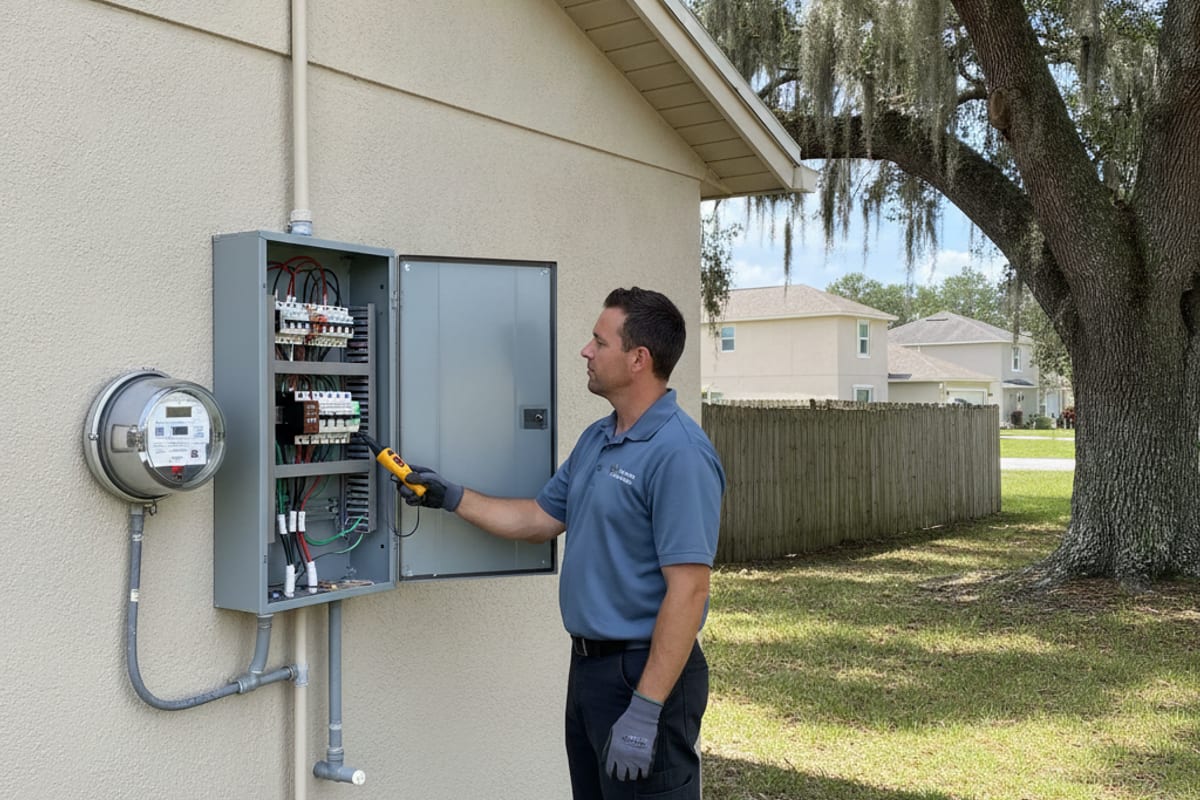
Electrical problems do not all call for the same response. Smoke or fire means leaving the hazard area and contacting emergency services. Unexplained widespread flickering, burning odors, hot or discolored plates, buzzing or crackling, shocks, and breakers that trip repeatedly call for prompt inspection by a qualified electrician.
Planned work starts with a different question: what does the existing electrical system support? A panel upgrade, EV charging circuit, fixture installation, or whole-home generator project should be based on the actual equipment, wiring, loads, access, and property jurisdiction.
Tampa Electrical Pro connects Trinity customers with independent licensed and insured electricians. For Trinity and Starkey Ranch service, start with the Trinity electrician page. Newer Starkey Ranch homes still need a load check before an EV charger or pool, not an automatic panel upgrade. The selected contractor determines the diagnosis, scope, scheduling, permit responsibilities, workmanship terms, and price.
Start with the problem you can observe
Useful details help an electrician narrow the inspection without asking you to open electrical equipment. Note which lights, receptacles, or appliances are affected, when the problem occurs, and whether it involves one location or several parts of the home.
A dead receptacle can involve the receptacle itself, the circuit, or GFCI protection located elsewhere. A receptacle without test and reset buttons may still be protected by an upstream GFCI device. A room or group of outlets losing power can have several causes, so the affected circuit needs to be inspected rather than diagnosed from the symptom alone.
If a breaker trips again after it has been reset, do not keep resetting it. Avoid touching a wet or visibly damaged panel, removing covers, or reaching inside electrical equipment. Tell the electrician what was running when the problem appeared and whether you noticed heat, odor, noise, discoloration, or flickering.
Repair, replacement, and new work are different scopes
Replacing a failed device at an existing location is not the same project as adding a new circuit. New work can involve routing cable, gaining access through finished areas, confirming the intended load, selecting compatible equipment, and coordinating any required inspection.
Before approving work, ask the contractor to separate diagnosis from the proposed repair. The written scope should identify the affected equipment, whether existing wiring will remain, what access is required, which materials are included, and how changes will be handled if inspection reveals another condition.
For outdoor equipment, the actual exposure matters. Equipment protected from damp air is not automatically suitable for direct water exposure. The product listing, mounting location, and manufacturer instructions should match the conditions at the property.
When a panel upgrade may or may not be the answer
Service capacity, available breaker spaces, and equipment condition are separate questions. A panel can have no open spaces without proving that the electrical service lacks capacity. A subpanel may add circuit spaces, but it does not increase the capacity of the electrical service.
Likewise, an older service rating does not automatically prove that an upgrade is required. The electrician needs to examine the equipment and evaluate the existing and proposed loads. Corrosion, heat damage, incompatible components, physical deterioration, or a planned load addition can change the scope, but a generic page cannot determine the correct repair from the panel label alone.
EV charging illustrates why that evaluation matters. Level 1 charging can cover some drivers’ daily needs when suitable dedicated power and enough parked time are available. Level 2 charging uses 240 volts and is a continuous electrical load. The vehicle, daily driving needs, charging time, equipment instructions, circuit route, and calculated electrical capacity all affect the choice. A smart charger’s app or scheduling features do not, by themselves, prove that it manages the home’s service load.
A standby generator is different. It supplies selected loads during an outage and does not, by itself, add utility load to the home. Its design still depends on the essential-load plan, fuel, listed equipment, transfer arrangement, and installation conditions.
Generator and storm-safety questions
Portable generators can power individual appliances through properly rated outdoor cords. They should operate outdoors, far from the home and away from openings. Never run a fuel-burning generator in a home, garage, basement, crawlspace, or shed.
Do not connect a portable generator directly to house wiring or treat switching off the main breaker as adequate backfeed protection. Fixed standby equipment is professionally installed with transfer equipment that isolates the home from the utility. Standby equipment still produces combustion exhaust, so its placement follows the instructions for the specific listed equipment and local review.
A useful backup plan identifies the loads that matter, the available fuel, and how the equipment will be maintained. It should not assume that a generator can power every load or eliminate every outage concern.
If surge protection is included in a proposal, ask the electrician to identify the device, its connection point, and the limitations in its manufacturer instructions. It should not be presented as a guarantee against every electrical event.
Permits and electrician credentials
Permit and inspection requirements depend on the work and the authority responsible for the property. A Trinity mailing address alone should not be used to guess the jurisdiction. The contractor should confirm the authority for the actual address and explain whether the proposed scope requires a permit, who will submit it, and how inspections will be coordinated.
Florida electrical credentials are also more specific than a single EC-only rule. Certified electrical contractors can work statewide, registered contractors work within their authorized local jurisdictions, and specialty licenses have limited scopes. Verify that the business has active credentials covering the proposed work and jurisdiction rather than assuming every person on a crew individually holds the same contractor license.
Ask for a written proposal showing the business name, scope, exclusions, payment terms, permit responsibility, equipment information, and any warranty the contractor actually offers. Do not rely on an unitemized verbal total or an assumed standard warranty.
GFCI protection and aluminum branch wiring
GFCI protection is intended to reduce shock risk from ground faults. It can be provided at different points on a circuit, so the absence of test and reset buttons on one receptacle does not prove the circuit lacks protection. Overcurrent protection, GFCI protection, and arc-fault protection perform different jobs and should not be treated as interchangeable.
If aluminum branch-circuit wiring is present, the evaluation should cover the actual conductors and connections rather than relying on the home’s age or neighborhood. Corrective options depend on the complete connection inventory, compatible equipment, and a qualified repair method. This branch-circuit issue should not be turned into a blanket claim that every aluminum feeder or service conductor is defective.
Questions to ask before authorizing work
Ask the electrician:
- What condition did the inspection identify?
- Is this a repair at an existing location or new circuit work?
- What existing wiring and equipment will remain?
- Does the proposed load require a load calculation?
- What access, routing, shutdown, or utility coordination is involved?
- Which equipment model and manufacturer instructions control the installation?
- Does the property jurisdiction require a permit or inspection for this scope?
- What is included, excluded, and documented in the proposal?
These questions make competing proposals easier to compare because they focus on the actual electrical scope.
Frequently asked questions
How much does electrical work in Trinity cost?
The price depends on what the inspection finds. Replacing an existing device differs from installing a new circuit, opening finished surfaces, correcting damaged wiring, coordinating utility work, or changing service equipment. Ask for a written scope that separates included work from possible additions.
Does every electrical project need a permit?
No single answer covers every project. Requirements depend on the work and the jurisdiction responsible for the property. The contractor should identify the applicable authority and permit responsibility before work begins.
Does a full panel mean I need a service upgrade?
Not necessarily. Full breaker spaces and service capacity are different issues. A subpanel can create additional circuit spaces but cannot increase service capacity. The existing loads and proposed work need to be evaluated before selecting a solution.
What if lights flicker throughout the home?
Widespread or unexplained flickering should receive prompt qualified inspection. It can have more than one cause, and a generic symptom cannot establish whether the issue is in a branch circuit, service equipment, another connection, or the utility system.
Can I replace electrical devices myself?
A homeowner can safely handle non-electrical tasks such as replacing an undamaged decorative cover without opening equipment or disturbing wiring. Work involving conductors, panels, new circuits, damaged equipment, uncertain de-energization, or wet conditions should be left to a qualified electrician.
Request a Trinity electrician referral
Call Tampa Electrical Pro at (813) 850-0320 to request a connection with an independent licensed and insured electrician serving Trinity. The matched contractor will evaluate the property and provide the proposed scope, scheduling, permit information, and price.