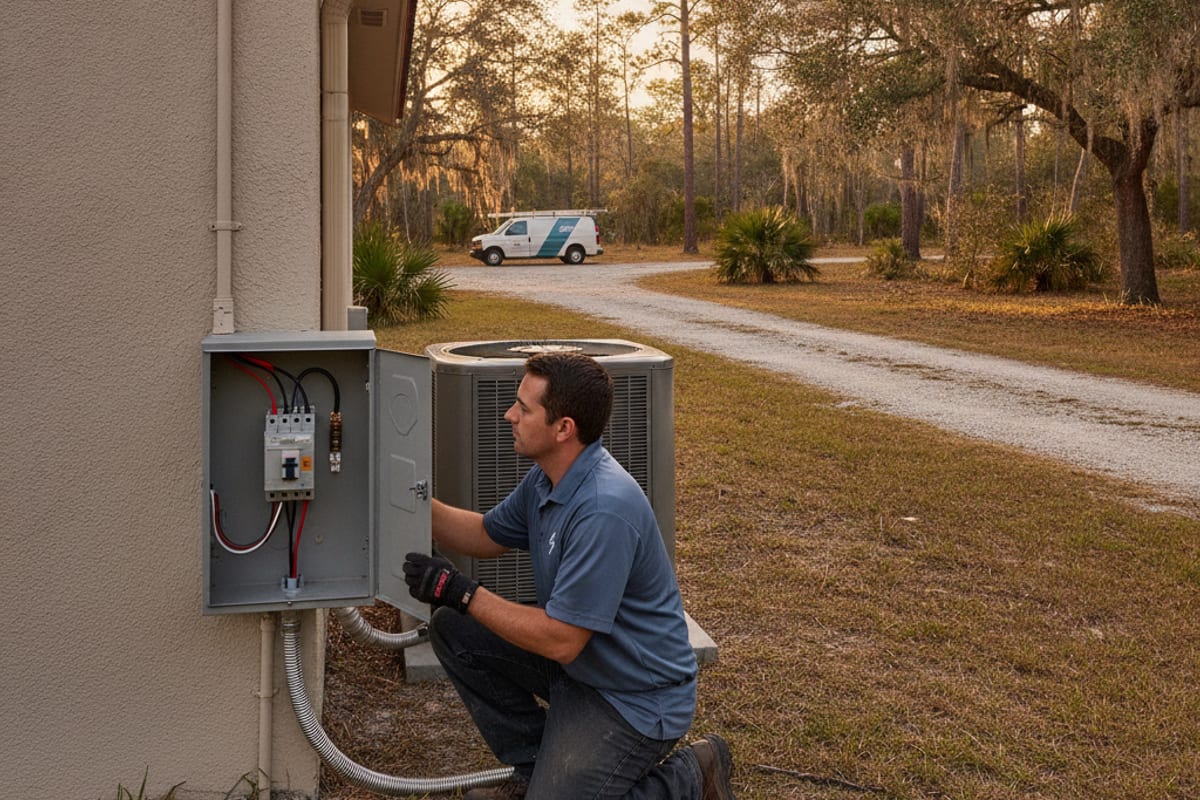
Electrical work in Odessa can range from tracing one dead receptacle to planning a new circuit, replacing damaged equipment, or evaluating a panel before a larger installation. The right starting point is the actual condition at the property, not its age or neighborhood.
Tampa Electrical Pro connects customers with independent licensed and insured electricians who serve Odessa. The selected contractor evaluates the work, confirms scheduling and pricing, and determines which permits or inspections apply.
Start with the symptom or project
For a repair, note what lost power, when it happens, whether the problem is recurring, and whether you noticed heat, discoloration, noise, odor, or a shock. Those details help an electrician narrow the inspection, but they don’t establish the cause by themselves.
One dead receptacle could involve the device, an upstream GFCI, the breaker, or another connection on the circuit. A room without power may also have several possible causes. An electrician can trace the affected circuit and test the components instead of replacing parts based on a guess.
For planned work, useful details include whether the circuit already exists, the equipment model and labeling, the proposed location, the wiring route, and access above or behind the installation. Outdoor and exposed locations also require equipment suited to the actual environment.
Common projects include:
- Troubleshooting outlets, switches, lighting, and recurring breaker trips
- Adding circuits for appliances or other equipment
- Evaluating or replacing electrical panels
- Installing ceiling fans and compatible controls
- Planning EV charger installation
- Evaluating a whole-home generator and essential loads
Warning signs need qualified inspection
Unexplained widespread flicker or dimming, repeated trips, hot or discolored plates, buzzing or crackling, burning odors, and electrical shocks call for prompt inspection by a qualified electrician. A page can’t determine whether the problem is in a branch circuit, service equipment, connected equipment, or another part of the electrical system.
Don’t open a panel, remove covers, touch wet or damaged electrical equipment, or keep resetting a fault. If there is smoke or fire, leave the hazard area and contact emergency services.
Panel space and electrical capacity are different
A panel with no open breaker positions doesn’t automatically require a service upgrade. Breaker space, service capacity, equipment condition, and the property’s calculated electrical load are separate questions.
A subpanel may provide additional circuit positions, but it doesn’t increase the amount of utility power available to the property. A panel upgrade may be appropriate when the existing service or equipment can’t support the proposed work, but panel amperage alone doesn’t settle that decision. The electrician needs the actual loads and installation plan.
A standby generator also shouldn’t be treated as another utility load. It supplies selected loads during an outage and must be isolated from the utility through properly installed transfer equipment. The planning questions are which loads need backup, how the equipment will be fueled and maintained, and how it will be installed according to its listing and local review.
EV charging requires a load-based plan
Level 2 charging uses 240-volt power and is a continuous electrical load. The vehicle, daily driving requirement, parked time, charger instructions, and the property’s available electrical capacity affect the right setup.
A full-charge-every-night promise doesn’t fit every vehicle or driver. A smart charger’s timer, data, or app features also don’t prove that it manages the property’s service load. An electrician should evaluate the selected equipment and the existing system before deciding whether the project needs a new circuit, another charging approach, panel work, or service changes. Equipment installed outdoors must be rated for that exposure.
Generator connections need transfer isolation
A portable generator may power individual appliances through properly rated outdoor cords. It must operate outdoors, far from the house and away from openings. It doesn’t belong in a home, garage, basement, crawlspace, or shed because fuel-burning equipment creates carbon monoxide, fire, and electrical hazards.
Connecting a generator directly to house wiring is different from using appliance cords. Direct backfeeding is unsafe, and turning off the main breaker isn’t a substitute for approved transfer isolation. Fixed standby equipment needs professional installation based on the particular unit, fuel arrangement, essential-load plan, and property conditions.
Permits depend on the work and jurisdiction
The permitting authority comes from the property’s actual jurisdiction, not just the city name in a mailing address. For a property governed by Hillsborough County, the county’s published exemption list doesn’t create a general exemption for altering, replacing, or relocating electrical wiring systems. Its listed electrical exception is narrow and applies to qualifying low-voltage work in an existing single-family residence. A new 240-volt circuit isn’t low-voltage work.
Don’t assume a device replacement, new outlet, new circuit, or service change follows the same permit path. Ask the selected contractor to identify the applicable authority, explain whether a permit and inspection are required, and state who will submit the paperwork.
Verify the right electrical license
Florida electrical licensing isn’t limited to one universal EC category for every type of work. Certified electrical contractors can work statewide, registered contractors work within authorized local jurisdictions, and specialty licenses have defined limits.
Before hiring, verify the business’s active license status, scope, and applicable jurisdiction through the Florida Department of Business and Professional Regulation. Confirm insurance directly and make sure the written proposal identifies the contracting business that will perform the work.
Compare written scopes, not unsupported averages
Electrical pricing and duration depend on what the electrician finds and what the project requires. An accessible replacement on an existing circuit has a different scope from concealed routing, a new circuit, panel work, outdoor trenching, utility isolation, or correction of damaged connections.
A useful written proposal should identify:
- The observed problem or proposed installation
- What testing or diagnostic work is included
- Whether wiring, circuit, panel, or service changes are expected
- Access, routing, mounting, and exposure considerations
- Permit and inspection responsibilities
- Included equipment, materials, labor, and exclusions
- Testing, cleanup, documentation, and warranty terms
For a ceiling fan, an existing light box doesn’t establish that the box is rated and securely supported for a fan. Ceiling access, structural support, wiring, controls, and the selected fan all affect the scope.
GFCI protection and aluminum wiring
A receptacle without test and reset buttons may still receive GFCI protection from an upstream device. GFCI shock protection, AFCI arc-fault protection, and overcurrent protection serve different purposes, so an electrician should trace the circuit before deciding what protection is present or missing.
If aluminum branch-circuit wiring is actually present, the evaluation should cover the relevant connections rather than relying on the home’s age. Repair choices depend on the wire, connected equipment, and approved method. Aluminum branch wiring also shouldn’t be confused with every aluminum feeder or service conductor.
Connect with an Odessa electrician
Call Tampa Electrical Pro at (813) 850-0320. We’ll connect you with an independent licensed and insured electrician who serves Odessa so you can discuss the symptoms, project scope, property jurisdiction, and next step.