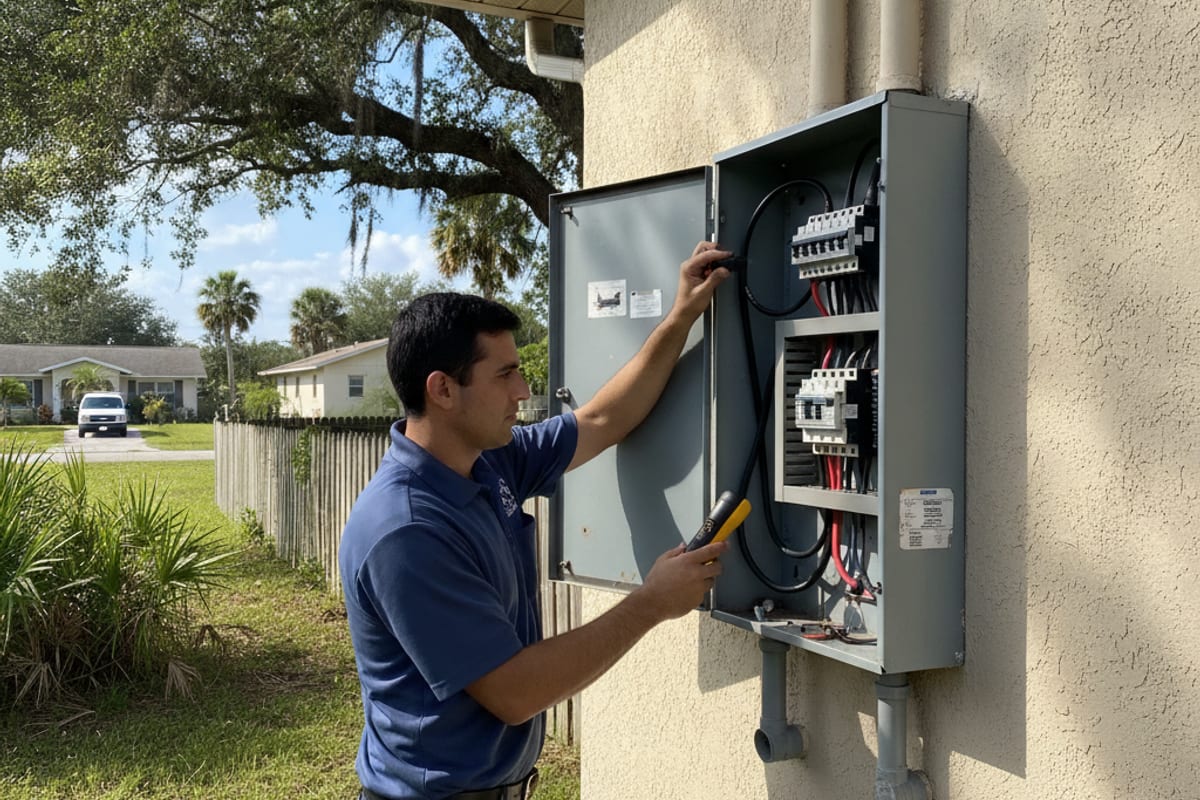
Electrical work in Bloomingdale can range from tracing a dead receptacle to planning a new circuit, replacing damaged equipment, or evaluating whether a service change is justified. The right solution depends on the equipment, existing wiring, available circuit space, calculated load, access, and the symptoms found at the property.
Tampa Electrical Pro is a referral service. We connect Bloomingdale customers with independent licensed and insured electricians. The selected contractor evaluates the property and determines the work scope, scheduling, permit responsibilities, and price.
Start with the actual electrical condition
A home’s age, appearance, or neighborhood doesn’t reveal its wiring material, panel capacity, or remaining electrical capacity. Renovations and earlier repairs can leave two similar properties with very different systems.
An electrician may need to inspect:
- The panel and service equipment condition
- Breaker and circuit labeling
- The loads already served
- Open circuit spaces and whether the listed equipment supports the proposed work
- Wiring at the affected devices and connections
- Moisture, corrosion, heat, or physical damage
- Access for a new cable route
- The model and installation requirements of the new equipment
These observations matter more than assumptions based on when the property was built.
Symptoms that call for professional inspection
One dead receptacle doesn’t identify the cause by itself. The problem could involve the receptacle, upstream GFCI protection, a breaker, another connection on the circuit, or damaged wiring. A room losing power also requires diagnosis rather than an automatic breaker replacement.
Unexplained flickering or dimming, frequent breaker trips, buzzing or crackling, shocks, burning odors, and hot or discolored plates call for prompt inspection by a qualified electrician. Widespread flicker can originate at different points in the electrical system, including equipment under utility control, so a generic description can’t establish the cause or declare it harmless.
Don’t open a panel, remove covers, touch wet or damaged electrical equipment, or repeatedly reset a breaker that continues to trip. If there is smoke or fire, leave the hazardous area and contact emergency services.
For other repair concerns, note which lights, receptacles, or appliances are affected and whether the problem is constant or intermittent. That information can help the electrician narrow the inspection without asking you to perform hazardous tests.
Our electrical repair service explains how to request help with these problems.
Panel replacement, service capacity, and circuit space
A panel can require attention because of damage, corrosion, incompatible equipment, poor connections, or insufficient space for planned circuits. Those are separate questions from the property’s service capacity.
A larger panel enclosure or a subpanel can provide more circuit spaces, but it doesn’t automatically increase the electrical service available from the utility. Conversely, a panel with no open breaker positions doesn’t prove that the service must be enlarged. The electrician must evaluate the existing equipment and calculate the loads involved.
A panel upgrade may include panel replacement, service changes, or related equipment, depending on what the inspection and load calculation support. Ask the contractor to distinguish clearly between replacing damaged equipment, adding circuit space, and increasing service capacity.
Planned equipment also needs to be considered correctly:
- An EV charger is a continuous electrical load. The vehicle, daily driving needs, parked time, charger requirements, and available capacity affect the installation.
- Level 2 charging uses 240 volts, but the panel’s labeled amperage alone doesn’t determine whether a service upgrade is needed.
- A standby generator supplies backup power. It doesn’t add utility load by itself, although its connection equipment, essential-load plan, fuel requirements, and installation still need professional evaluation.
New circuits and equipment installations
A useful estimate begins with the actual scope. For a new circuit, the electrician may need to determine the equipment load, route length, wall or ceiling access, panel compatibility, outdoor exposure, and whether trenching or surface-mounted wiring is involved.
For ceiling fans, an existing light box isn’t proof that the box is rated or structurally secured for fan support. The fan model, mounting system, controls, wiring, and location all affect the work. In outdoor areas, the selected fan and electrical equipment must match the actual exposure. A protected damp location and a location exposed to water aren’t the same installation condition.
For receptacles near moisture or outdoors, GFCI protection may be provided at the device or upstream on the circuit. The absence of test and reset buttons on one receptacle doesn’t prove that the circuit lacks GFCI protection. Overcurrent protection, GFCI shock protection, and AFCI arc-fault protection perform different functions, so the electrician should identify what is present instead of treating the terms as interchangeable.
Aluminum wiring requires identification, not assumptions
A property’s location or construction date doesn’t establish that it contains aluminum branch-circuit wiring. If aluminum conductors are present, the electrician should identify what type of wiring is involved and inspect the relevant connections.
Branch-circuit remediation requires a complete connection inventory. Depending on the actual conductors and equipment, qualified repair options can include rewiring with copper or approved connector methods used under their specified conditions. This branch-circuit issue shouldn’t be turned into a blanket claim that every aluminum feeder or service conductor is defective.
Permits and electrical jurisdiction
Permit requirements depend on the work and the authority responsible for the property. Hillsborough County’s published exemption for certain existing-home low-voltage work doesn’t cover a new 240-volt branch circuit. Other alterations, replacements, or relocations of wiring systems must be reviewed under the applicable permit rules.
Before work begins, confirm which authority has jurisdiction over the property and ask the selected contractor to state in writing:
- Whether a permit and inspection apply to this scope
- Who will submit the application
- Whether permit-related charges are included
- What documentation will be provided when the work is complete
Don’t rely on a blanket claim that every device replacement requires a permit or that all electrical work is exempt when it appears small.
Surge protection and backup power
Surge protection and backup power address different problems. A surge protective device helps manage electrical transients; it doesn’t provide electricity during an outage or promise protection from every possible event. Learn more about surge protection options.
A fixed standby generator uses transfer equipment to isolate the property from utility power during backup operation. The plan should identify essential loads, fuel needs, equipment maintenance, exhaust considerations, and the manufacturer’s installation requirements. A generator isn’t a permanent answer to every outage and doesn’t guarantee uninterrupted service. Our whole-home generator service covers the planning questions to discuss with an installer.
Portable generators are different. They can power individual appliances through properly rated outdoor cords, but they must not be connected directly to house wiring without appropriate professionally installed transfer equipment. Fuel-burning generators belong outdoors, far from the building and away from openings. They must never run inside a home, garage, basement, crawlspace, or shed.
How to compare electricians in Bloomingdale
Florida has certified, registered, and specialty electrical contractor categories with different geographic or work-scope limits. An EC credential isn’t the only lawful category for every type of electrical work. Verify that the business has an active license with the appropriate scope and jurisdiction for your project, and confirm current insurance.
A written proposal should explain:
- The problem or installation being addressed
- What testing or troubleshooting is included
- The equipment and materials included in the scope
- Any access, finish repair, or restoration exclusions
- Permit and inspection responsibility
- The contractor’s price and payment terms
- The proposed schedule
- Any workmanship or manufacturer warranty that actually applies
Warranty terms, availability, and arrival times vary by contractor. Ask for them in writing rather than assuming a particular term is standard.
Questions to ask before authorizing work
Does a tripped breaker mean the breaker is defective?
Not necessarily. A trip can result from an overload, fault, damaged equipment, wiring problem, or breaker issue. If it trips again, leave it off and have the circuit inspected instead of continuing to reset it.
Does a full panel mean I need a service upgrade?
No. Full breaker positions concern circuit space, while service capacity concerns the calculated electrical load and the service equipment. A subpanel may add spaces, but it doesn’t increase service capacity.
Can an electrician quote a repair from a symptom alone?
Some installations can be scoped from clear equipment details and photos, but many repair symptoms require on-site diagnosis. Ask how diagnostic work is charged and whether that amount is applied to an authorized repair.
Who determines whether a permit is required?
The applicable building authority controls the requirement. The selected contractor should confirm the property’s jurisdiction and the rules for the exact work instead of relying on a universal answer.
What should I provide when requesting help?
Share the property location, affected equipment, symptom pattern, equipment model when available, and any known changes that happened before the problem began. Don’t remove electrical covers or approach wet or damaged equipment to collect information.
Connect with a Bloomingdale electrician
Tampa Electrical Pro can connect you with an independent licensed and insured electrician serving Bloomingdale. Describe the affected area and the work you’re considering so the selected contractor can evaluate the scope, explain the options, and provide project-specific terms.