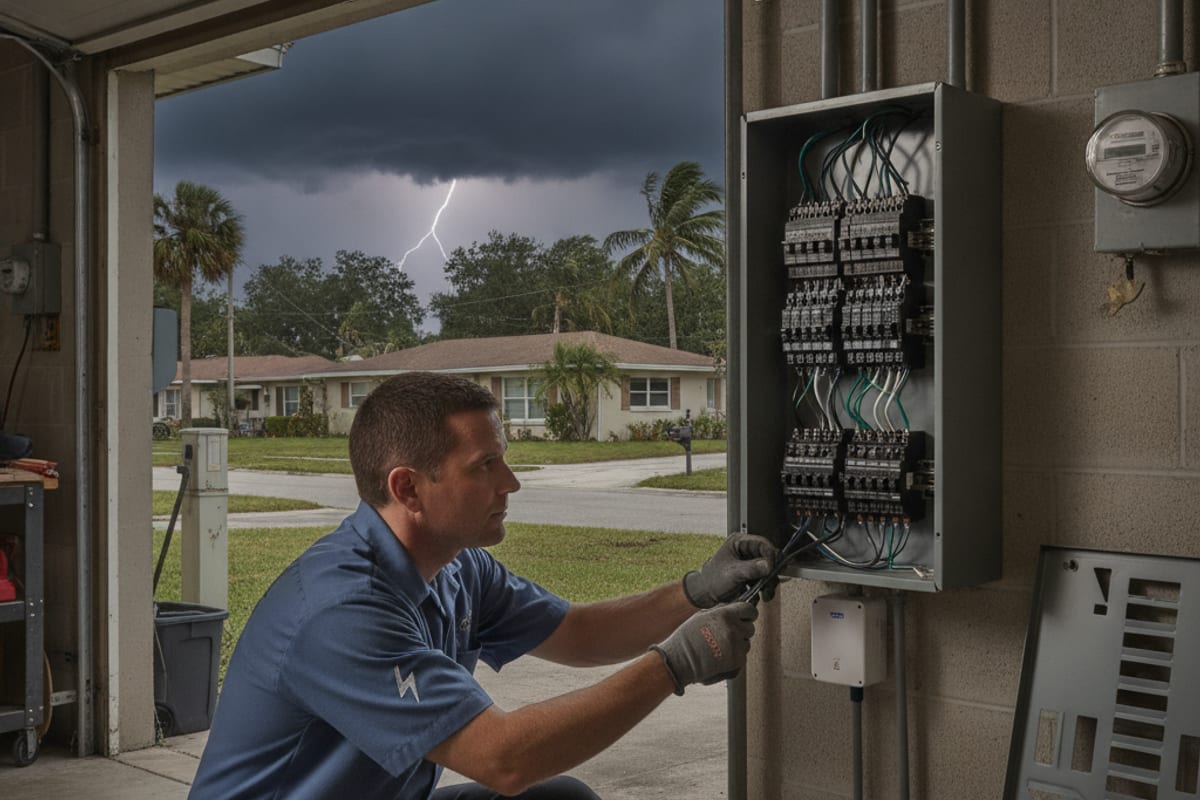
This site’s published range for surge protection at the panel is $300 to $600. That is not a quote for every house. The cost of a whole-house surge protector in Tampa still depends on the selected device, where it can be installed, panel compatibility, access, and whether the electrician finds separate grounding, bonding, or panel work that needs attention. Those compatibility, grounding, and access variables are what move a quote off that band. A straightforward installation at compatible equipment has a different scope from a project that requires electrical corrections before the protector can be connected properly.
Tampa Electrical Pro connects homeowners with independent licensed and insured electricians. The selected contractor determines the installation method, permit needs, schedule, and final price after reviewing the property.
What changes the installation cost?
The most useful quote separates the surge protector installation from any unrelated electrical work. Important scope details include:
- The device’s listing, electrical rating, and permitted installation location
- Compatibility with the existing service equipment or panel
- The connection method required by the device manufacturer
- Available working access around the equipment
- The condition of the grounding and bonding system
- Whether other panel work is already planned
- Permit and inspection requirements for the property’s jurisdiction
A higher quote should identify which of these conditions changed the work. It shouldn’t simply label the installation complicated without explaining why.
Does a full panel mean the service must be upgraded?
No. Circuit space and electrical service capacity are separate questions.
A panel with no open breaker positions may require a different connection plan, but that condition alone doesn’t prove the home needs a larger electrical service. A subpanel can provide additional circuit space, but it doesn’t increase the utility service capacity. The electrician must evaluate the actual equipment, installation instructions, existing loads, and proposed work before recommending panel changes.
If broader work is necessary, ask for it to be itemized separately from the whole-house surge protection installation.
Why do grounding and bonding matter?
A surge protective device needs to be installed as part of a properly configured electrical system. The electrician may inspect grounding and bonding conditions because they affect the surge path and the installation method.
That inspection doesn’t mean every home needs a grounding upgrade. It means the contractor should verify the actual system instead of assuming its condition from the home’s age or neighborhood. If corrective work is recommended, the quote should explain the observed condition and distinguish that work from the protector itself.
What can a whole-house surge protector protect against?
A properly selected and installed device is intended to limit transient voltage before it reaches connected equipment. Surges can come from outside the home or arise within its electrical system.
Surge protection reduces risk, but it doesn’t guarantee that every appliance will survive every event. No protector should be presented as complete protection from a direct lightning strike or as a promise that a future repair will be prevented. Grounding, device condition, installation, and the characteristics of the event all matter.
For a broader explanation of surge sources and device placement, see our guide to surge protection and Tampa Bay lightning.
Do Tampa homes automatically need both Type 1 and Type 2 protection?
No single combination should be prescribed without reviewing the installation. Device types are tied to approved placement and connection conditions. The right choice depends on the service equipment, panel, selected product, and manufacturer instructions.
Point-of-use protectors may supplement protection for particular equipment, but they don’t replace a properly evaluated panel-level installation. Some products include status indicators and some use different monitoring features, so follow the instructions for the specific device instead of assuming every protector reports its condition the same way.
Does panel compatibility affect the quote?
Yes. The electrician needs to confirm that the proposed device and connection method are appropriate for the existing equipment. Panel labeling, available connection options, mounting location, conductor routing, and access can all change the work.
A quote should identify the proposed device and installation point. Brand recognition alone doesn’t establish compatibility or make one product correct for every panel.
Is a permit required in Tampa Bay?
Permit requirements depend on the property jurisdiction and the full scope of work. A Tampa mailing address doesn’t always identify the permitting authority, and a surge protector installed during a panel upgrade may be reviewed differently from an isolated installation.
The selected electrician should determine the correct authority and explain whether the quoted work includes permitting and inspection. Don’t assume that every standalone installation is exempt or that one Tampa Bay jurisdiction’s process applies throughout Hillsborough and Pinellas counties.
Is it better to add protection during other panel work?
Coordinating the work can simplify access and planning, but it doesn’t guarantee a lower total price. The contractor still needs to price the protector, its connection, and any separate electrical corrections accurately.
If you’re already considering a panel upgrade, Federal Pacific or Zinsco replacement, or whole-home generator, ask for the surge protection portion to be listed separately. That makes it easier to understand what belongs to each part of the project.
Do EV chargers and generators change the decision?
They can change which connected equipment you want to protect, but they don’t establish a particular protector or panel upgrade by themselves.
An EV charger is an electrical load that must be evaluated with the home’s other loads. A standby generator is a backup supply, not an added utility load by itself. Its transfer equipment and connected electrical components still need to be considered when the electrician selects the location and connection method for surge protection.
How should you compare quotes?
Ask each electrician to identify:
- The proposed device and installation location
- Why it is compatible with the existing equipment
- What the base installation includes
- Whether grounding, bonding, or panel corrections are separate
- Whether permitting or inspection applies
- How the device indicates operating status, if applicable
- The manufacturer’s product warranty and any contractor workmanship terms
This comparison is more useful than choosing from an unsupported Tampa price range. It shows whether the quotes cover the same work and whether additional recommendations are tied to conditions observed at the property.
Frequently asked questions
Can a whole-house surge protector guarantee my electronics won’t be damaged?
No. It can limit transient voltage when properly selected and installed, but it can’t guarantee protection from every surge or direct lightning event.
Does an older home automatically need grounding work first?
No. Age and neighborhood don’t establish the condition of a home’s grounding and bonding system. An electrician needs to inspect the actual installation before recommending corrections.
Does a full breaker panel automatically require a service upgrade?
No. Breaker space and service capacity are different. The electrician must evaluate the equipment, existing loads, installation instructions, and proposed connection before recommending broader work.
Should every home have both Type 1 and Type 2 devices?
Not automatically. The appropriate device or combination depends on permitted placement, equipment compatibility, the electrical system, and manufacturer instructions.
How do I know whether the protector is still active?
Use the status method specified by the manufacturer. Many products provide an indicator, but the location, meaning, and replacement instructions depend on the particular device.
Get a scope-specific comparison
Tampa Electrical Pro can connect you with an independent electrician who can inspect the accessible equipment, explain the compatible options, and provide a project-specific quote for whole-house surge protection. The contractor should identify any separate panel or grounding work instead of burying it inside one unexplained total.