Tampa Electrical Pro connects Indian Rocks Beach homeowners with independent licensed and insured electricians. The selected contractor evaluates the property, explains available options, and determines the scope, scheduling, permits, and price.
Electrical work in Indian Rocks Beach often involves dealing with salt air, moisture, and the demands of waterfront living. Whether you need troubleshooting, a panel upgrade, surge protection, or help planning new circuits for renovations, a useful assessment starts with the actual symptoms, existing system, intended load, and work-area access.
Coastal challenges in Indian Rocks Beach
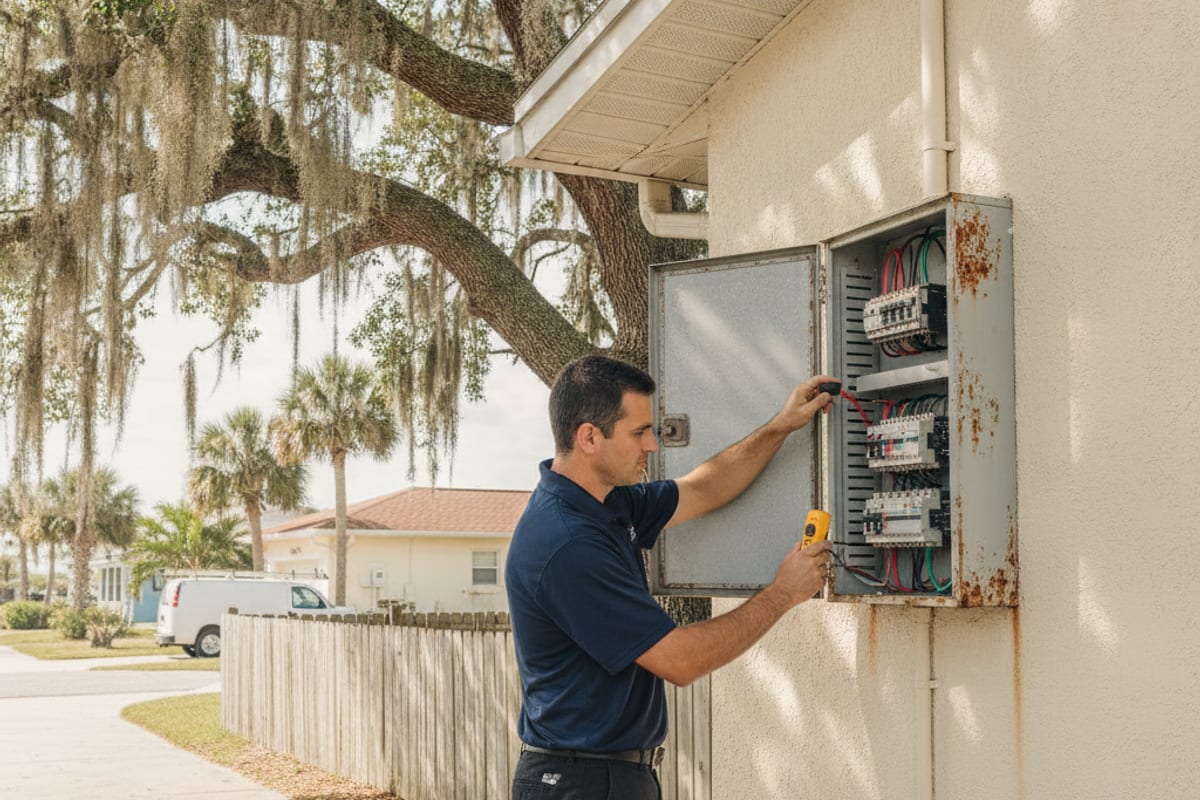
Homes in Indian Rocks Beach face distinctive electrical conditions because of proximity to the Gulf. Salt spray accelerates corrosion on exterior equipment, moisture intrudes more easily, and humidity creates conditions that favor oxidation on connections and terminals. An electrical panel that looks fine from ten feet away may have corroded lugs or discolored bus bars inside.
If you see white or green oxidation on outdoor disconnect boxes, meter cans, or panel covers, have it inspected. Corrosion that started on the outside can continue working inward, compromising connections and creating hazards. The same applies to moisture staining, water pooling near outdoor electrical equipment, or rust streaks on metal enclosures.
Don’t assume the condition is cosmetic. Have a qualified electrician assess whether corrosion has penetrated connections, affected terminal security, or altered the equipment’s ability to protect the house.
Seasonal demands and backup power
Indian Rocks Beach residents rely on air conditioning year-round and face the real threat of tropical storms and hurricanes. Backup power planning is practical, not optional. A whole-home generator can keep essential loads running during an outage, but planning depends on load calculations, fuel storage, transfer equipment, and available installation space.
Portable generators have their place for emergency use, but they belong outdoors, far from the home and away from openings. Never operate one in a garage, shed, or crawlspace. Never connect one directly to house wiring. Fixed standby equipment requires professional installation with proper transfer isolation from the utility.
Panel and service capacity
Homes in Indian Rocks Beach range from older beach cottages to modern waterfront estates, so service configurations vary widely. An older home on a 100-amp service may need an upgrade before adding an EV charger, hot tub, or new air conditioning. Newer construction often has 200-amp service, but that alone doesn’t guarantee capacity for every additional load.
An open breaker slot doesn’t mean the service or panel can support another large load. The electrician must evaluate actual loads, existing service amperage, panel condition, and equipment compatibility. For an EV charger specifically, the installer needs to know the vehicle, daily driving, available home charging time, and charger specifications. Level 2 charging uses 240 volts and is a continuous load that can’t be squeezed into whatever space remains in the panel.
Waterfront wiring and water exposure
Homes close to the water may have exterior circuits powering dock lights, receptacles, or pumps. Water-exposed wiring and equipment must meet stricter code requirements. GFCI protection is mandatory in wet locations, and enclosures must be rated for their actual exposure.
Tell the electrician where the equipment is and how it’s used. A receptacle mounted on a dock piling in direct salt spray has different requirements than one under an eave. Conduit type, enclosure rating, and conductor material all depend on the actual exposure. The same applies to any landscape lighting, pool equipment, or sprinkler-line electrical work.
Salt air and outdoor receptacles
Ordinary outdoor receptacles corrode quickly in Indian Rocks Beach. Stainless steel hardware, gasket seals, and properly installed weather covers help, but maintenance matters. Buildup inside outlet covers traps moisture and accelerates corrosion. If you see discoloration, pitting, or white powder around outdoor outlets, have the electrician inspect the interior connections.
Corroded contacts inside an outlet can cause arcing, heat buildup, and fire risk. Don’t keep plugging in and unplugging to work around a failing outlet. Have it replaced.
Choosing an electrician for coastal work
Florida electrical licensing is based on the contractor’s license type, scope, and authorized jurisdiction. Certified electrical contractors can work statewide, while registered contractors work within their authorized local jurisdictions. Verify that the business has active authority for the proposed work.
When requesting a quote for coastal work, provide:
- What the electrician will inspect or install
- Whether the work uses an existing circuit or requires a new one
- What equipment and access are included
- What conditions could change the scope
- Who will verify permits and handle inspections
- What workmanship and warranty terms apply
Indian Rocks Beach is an incorporated city. Pinellas County Building and Development Review Services issues building permits for it, and some scopes need city preapproval before the county application. The contractor should confirm the current city guide and the county permit path for the actual work before giving a price.
Frequently asked questions
Will salt air destroy my electrical panel?
Salt air accelerates corrosion, but it’s not immediate. The risk depends on the panel’s location, enclosure rating, and whether it’s maintained. Regular inspection matters more in Indian Rocks Beach than in inland areas. Have the electrician assess the panel’s condition as part of routine maintenance, and replace it if corrosion has compromised connections or the enclosure integrity.
Can I install a generator close to my dock or bulkhead?
No. Backup generators need a level, stable installation pad, proper clearance for airflow and maintenance, and protection from salt spray. The installation must follow the equipment manufacturer’s requirements and local code. The electrician works with you to find the best location for reliable operation and protection from the environment.
Is GFCI protection really necessary for my dock outlets?
Dock receptacles are outdoor or wet-location receptacles, not a special six-foot-from-water rule copied from kitchen sinks. Under NEC 210.8(A), 125-volt through 250-volt receptacles in the listed dwelling locations, including outdoors, need GFCI protection for personnel when they are supplied by single-phase branch circuits rated 150 volts or less to ground. The electrician confirms the actual location, exposure, and adopted code for the dock circuit, and can provide that protection at the receptacle or upstream.
How often should I have my exterior electrical equipment inspected?
There is no published annual inspection mandate for Indian Rocks Beach outdoor equipment. Have a qualified electrician inspect it when you see corrosion, staining, or damage, and after severe weather that reached the equipment.