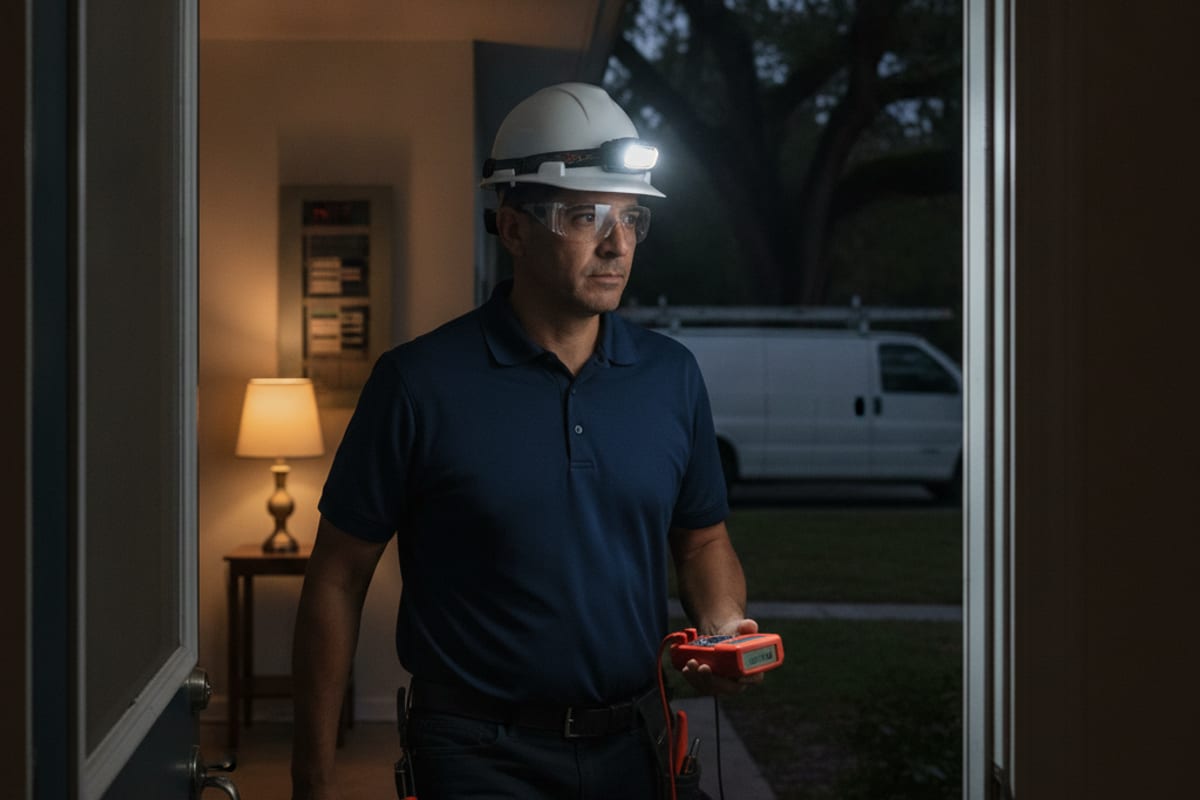
Electrical problems don’t keep a schedule. A breaker that won’t reset, sparks from an outlet, or a power loss during a storm can happen any time of day or night. When that happens in Tampa, knowing you can get a professional electrician right away makes the difference between a contained problem and a dangerous situation.
What counts as an electrical emergency
Not every after-hours electrical call is a true emergency. True emergencies need immediate attention to prevent injury, property damage, or further system failure. These include:
Smoke, burning smells, or visible fire near any electrical component. Flickering lights throughout the house accompanied by a burning odor. A breaker that trips immediately when you try to reset it, cutting power to part or all of the house. Shocks or tingling from touching a switch, outlet, light fixture, or appliance. Water dripping on or near the electrical panel, outlets, or any live wiring. A buzzing sound from the panel, an outlet, or behind walls. Any electrical damage from a lightning strike or power surge, even if power appears normal afterward. Sparks, arcing, or popping noises from an outlet, breaker, or fixture.
If you see smoke or fire, leave the hazard area and call 911. Do not touch it or attempt to fight it yourself.
Non-emergency electrical problems can usually wait for business hours. A single outlet that doesn’t work when others do, a light switch that doesn’t respond, or a ceiling fan that won’t turn on can be addressed during regular appointments without risk to safety.
How to stay safe before help arrives
If you’re waiting for an emergency electrician to reach your home, some simple steps will help protect you and your household.
Turn off power at the breaker for any circuit that’s acting abnormally. If you cannot reach the panel safely or don’t know which breaker controls the problem area, do not investigate further. Keep people and pets away from the affected outlet, fixture, or appliance. Do not touch the breaker panel if you see water, corrosion, or anything unusual near it.
If there’s a burning smell but no visible smoke, turn off power to that area at the breaker and open windows to ventilate. If the smell gets stronger, leave the house and call 911. Shut off the main breaker only if you are trained and completely confident about how to do so. If you’re unsure, leave it for the electrician.
Do not unplug and move a sparking or smoking appliance. Leave it where it is and stay clear. Do not use that outlet or appliance again until an electrician has inspected and approved it.
What to expect from a 24-hour service call
When you call Tampa Electrical Pro, describe what is happening, which area of the house is affected, and whether there is any smoke or burning smell. Be specific about safety concerns so we can match you with an independent licensed electrician who can prepare for the visit.
The selected electrician sets the arrival time after the call. Availability depends on that contractor, current demand, weather, and safe access. Emergency dispatch plus diagnostic runs $200 to $450. The selected electrician sets the final price for any repair that follows.
The electrician will arrive with diagnostic tools and parts common to emergency repairs. You should be ready to show them exactly where the problem is and describe what you’ve observed: whether the issue started suddenly or has been worsening, whether it’s affected by weather or time of day, and what you’ve already done (if anything). Provide access to the breaker panel and any relevant interior spaces.
Common late-night electrical problems
Half of your house losing power but the breaker doesn’t appear tripped is often a failed breaker or a loose connection at the main panel. These need urgent repair. A single circuit that repeatedly trips even with nothing plugged in may indicate a short inside the walls or a failing breaker. Do not ignore repeated trips. An outlet or switch that feels warm to the touch is a sign of excessive current, poor connection, or equipment failure. It’s a fire risk and needs immediate service.
Water damage or corrosion visible on outlets or near the panel after a storm requires inspection, even if power appears normal. Storm damage to electrical systems can be subtle, and a delayed failure is possible. A flickering light accompanied by other signs of electrical stress (buzzing, burning smell, or intermittent power loss) should not be dismissed as just a bulb issue.
Electrical repair versus emergency service
An emergency call addresses the immediate safety problem to restore safe conditions. Once that’s handled, further investigation or repair may be recommended. For example, if a breaker has failed, the emergency response might be to disable that circuit and establish safe service on the rest of the house. A follow-up appointment can then replace the breaker during business hours when you can schedule without stress.
Emergency service is faster and more expensive, so it makes sense to use it when there’s real danger or when the problem truly cannot wait. A single outlet that is not working can usually wait until morning. An electrical fire hazard cannot.
After emergency repairs are made
Once the emergency electrician stabilizes the problem and leaves, you’ll typically have a follow-up appointment to complete repairs or replacements. Ask the electrician for a summary of what happened, what temporary measures (if any) they took, and what you should avoid using until the next visit.
If temporary measures like a disabled circuit are in place, understand which outlets or fixtures are offline and plan accordingly. If an appliance has been shut off due to damage or a failed component, do not attempt to use it again. Older appliances with damage sometimes can be repaired; others need replacement.
When to call Tampa Electrical Pro for 24-hour help
Tampa Electrical Pro refers customers to independent licensed and insured electricians for emergency repair. When an electrical problem strikes at 2 AM or during a holiday, knowing you can reach someone who will come and address it safely is critical.
If you have an ongoing electrical concern that is not currently an emergency, the electrical repair service page has information about scheduling a daytime visit. For households with recurring problems or aging electrical systems, a full electrical inspection during business hours can identify and prevent future emergencies.
Common questions about 24-hour electrical service
Is it always more expensive to call after hours?
Yes, typically. Emergency service outside regular hours carries a premium because the electrician is responding on short notice and working outside standard scheduling. That extra cost is usually worth the safety benefit when the problem is a genuine emergency.
What if I am not sure if it is an emergency?
Call and describe what you’re seeing. We’ll help you decide whether to request an after-hours electrician or wait for a regular appointment. Never assume a buzzing, burning, or sparking electrical component is safe to ignore.
Can I do anything to prevent late-night electrical failures?
Regular inspections, not overloading circuits, and keeping moisture away from outlets and panels all help. Older homes with outdated electrical systems, aluminum wiring, or deteriorated panels are more prone to failure. A professional inspection can identify risks before they become emergencies.
What should I tell the electrician when they arrive?
Describe when the problem started, what you noticed first, what you have or have not done about it, and any patterns (does it happen in rain, at certain times, or when certain appliances run). That information helps the electrician diagnose quickly.
Do you handle emergency calls yourself?
Tampa Electrical Pro coordinates with independent licensed electricians throughout the Tampa Bay area for 24-hour service. Visit the emergency-electrician service page or contact the number on the website for after-hours referrals.